
Dometic CFX3 review: How does it compare to the new CFX5?
We’ve used a Dometic CFX3 45 in our own campervan for several years, giving us plenty of time to test its build quality, usability, reliability and real-world energy consumption.
Since we originally published this Dometic CFX3 review, Dometic has replaced the CFX3 with the newer Dometic CFX5 range. We’ve updated this guide to share how the CFX3 has performed long term, highlight its strengths and limitations, explain what has changed with the CFX5, and help you decide whether the CFX3 is still worth considering today.

Our long-term experience with the Dometic CFX3 45
Our overall experience with the Dometic CFX3 (now superseded by the Dometic CFX5 45) has been very positive. We’ve been using the Dometic CFX3 45 in our own campervan since it first came onto the market, so we’ve had plenty of opportunity to see how it performs during regular trips and extended off-grid use.
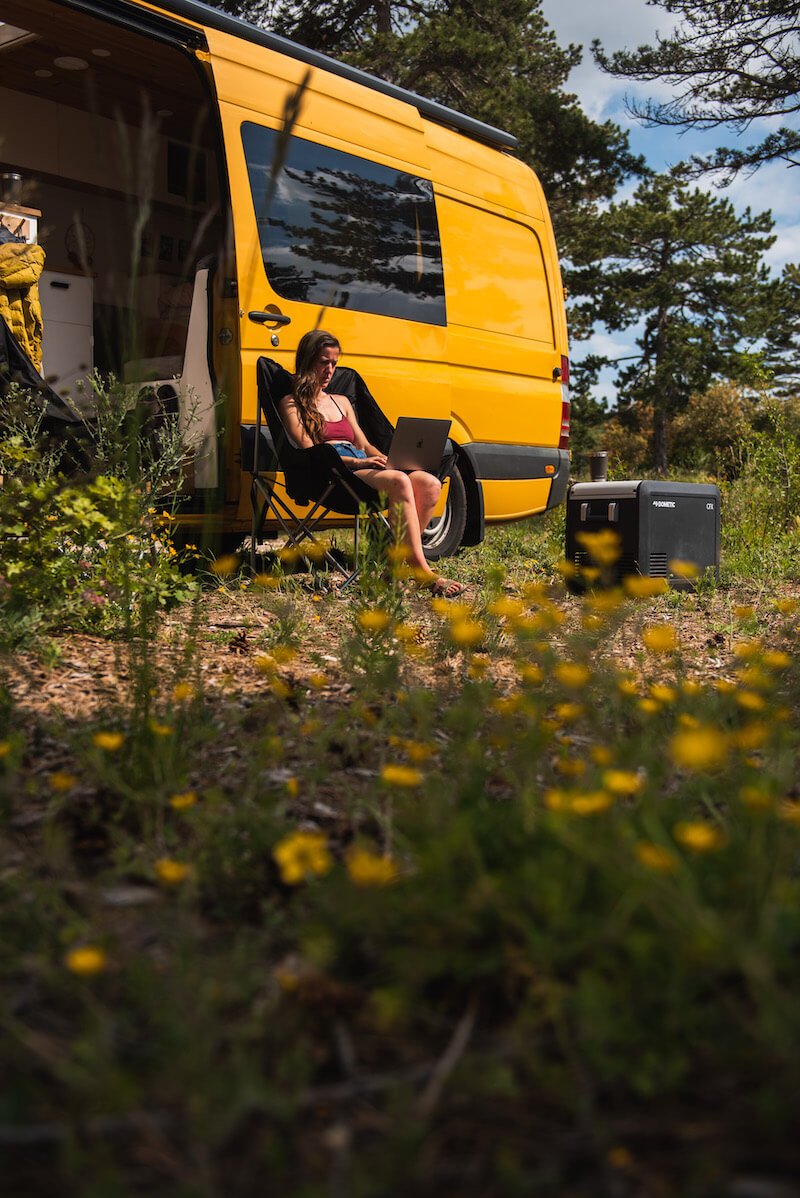
Over that time, it has been reliable, straightforward to use and considerably more capable than the traditional coolboxes we’d used previously. Its compressor cooling gives it the performance of a proper fridge or freezer, whilst the ability to run from either 230V AC or 12V DC makes it easy to use both on campsites and away from mains power.
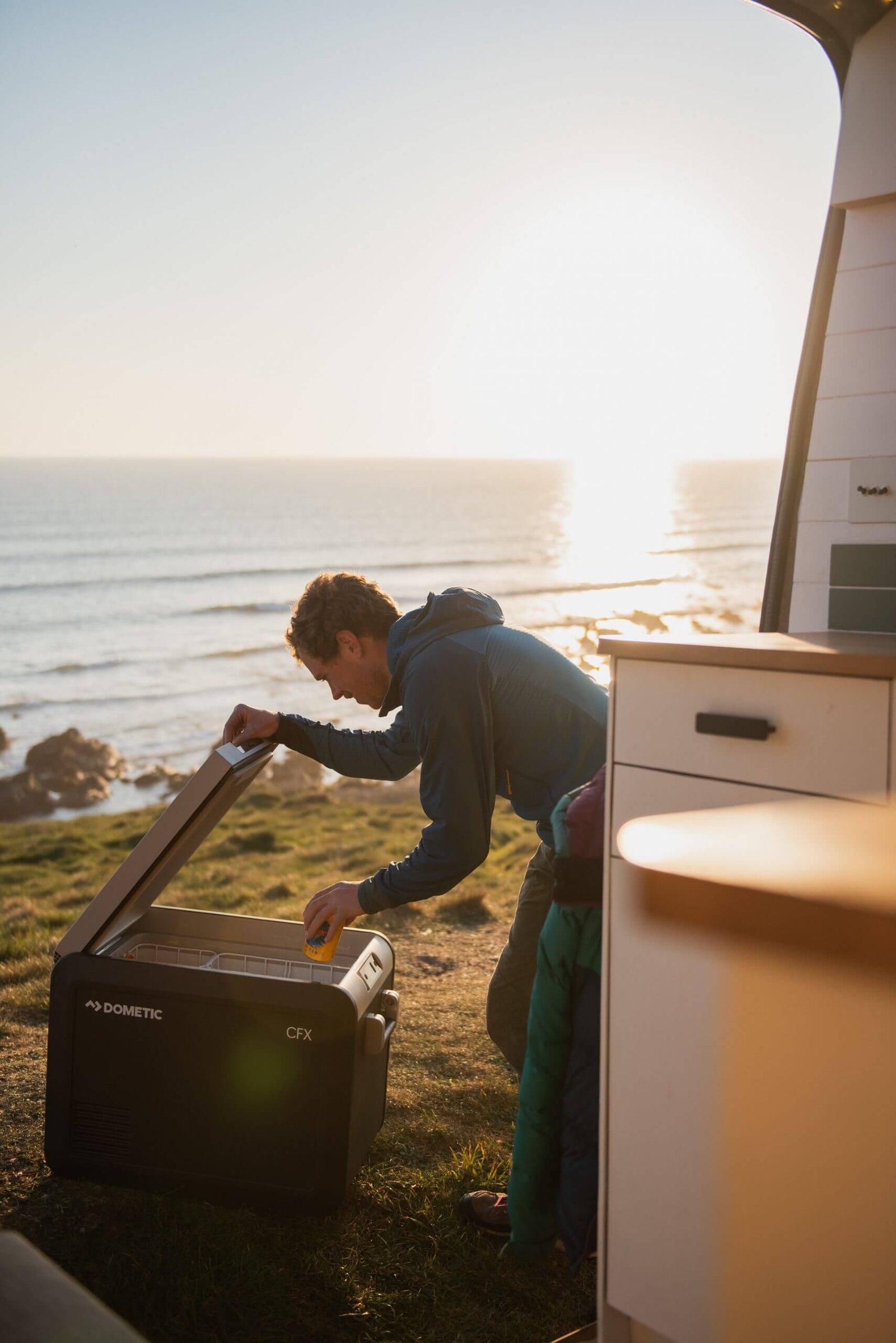
The chunky handles and robust exterior have also held up well to regular use in the van, including being moved around and loaded alongside other camping equipment. The CFX3 45 works well when you’re connected to mains power, but it can also run directly from your leisure battery when travelling or camping off-grid.
We do have some reservations about the 12V energy consumption of some of the larger models, particularly those with separate fridge and freezer compartments. This becomes more important if you plan to spend long periods away from mains hook-up, as the fridge can represent a significant continuous load on your electrical system.
We’ll look at power consumption in more detail below and explain how to factor it into your leisure battery and charging system.
The CFX3 was available in a range of sizes from around 25L up to 100L, and the Dometic CFX5 is now available in these same size options. Every model can be configured as either a fridge or freezer using the digital temperature control, whilst some of the larger versions have two separate compartments that can be run at different temperatures.

Is the Dometic CFX3 discontinued?
The Dometic CFX3 range has been discontinued; Dometic has replaced the CFX3 with the newer CFX5 range.
It is still worth considering if you already own one or find a used model or remaining retailer stock at a good price, but anyone buying new should compare it with the equivalent Dometic CFX5.
Dometic’s current UK CFX5 range includes the CFX5 25, 35, 45, 55, 55IM, 75DZ and 95DZ.
In this review, we’ll look at how the CFX3 has performed over several years of real-world use, break down the different sizes in the range and explain how it compares with the newer CFX5.
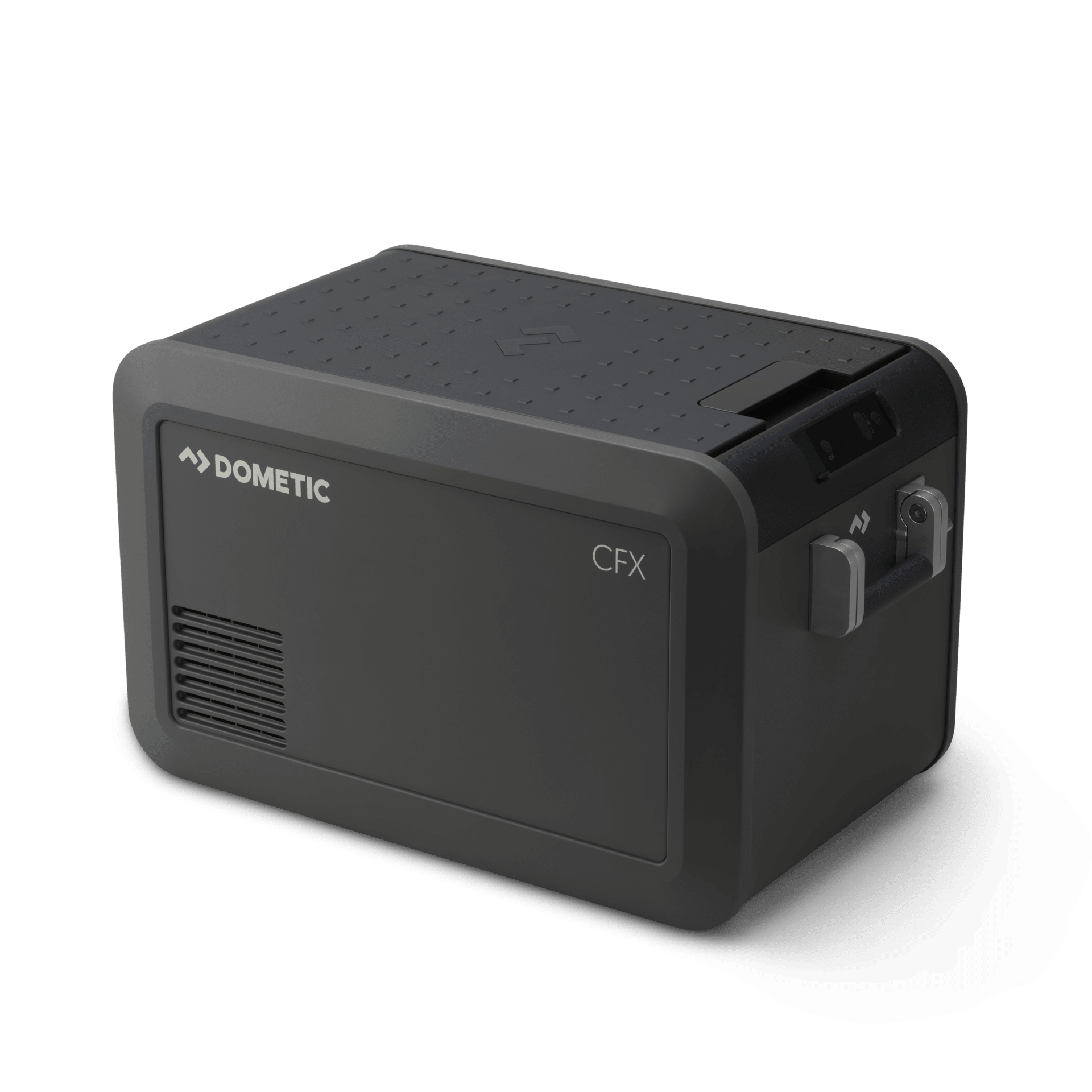
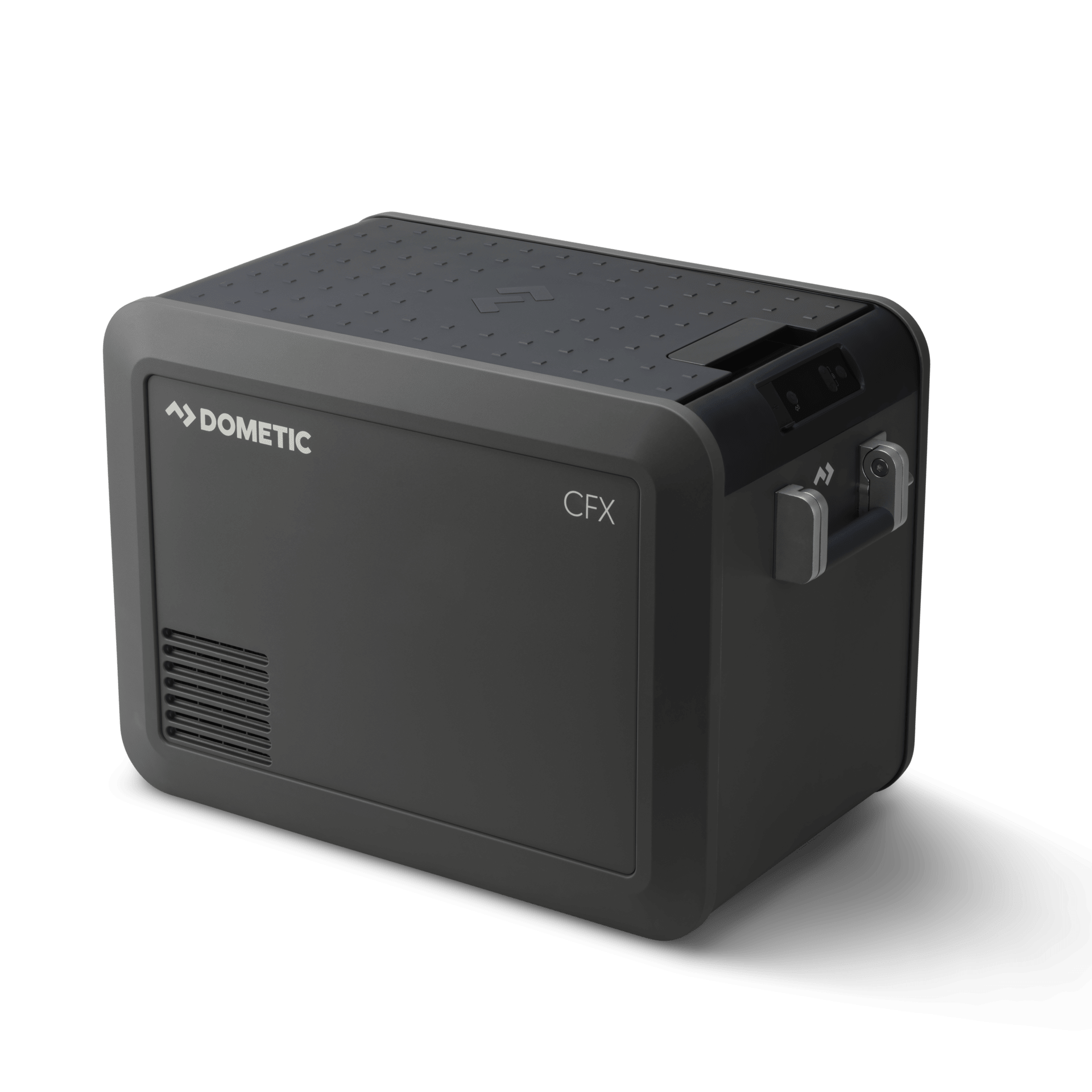
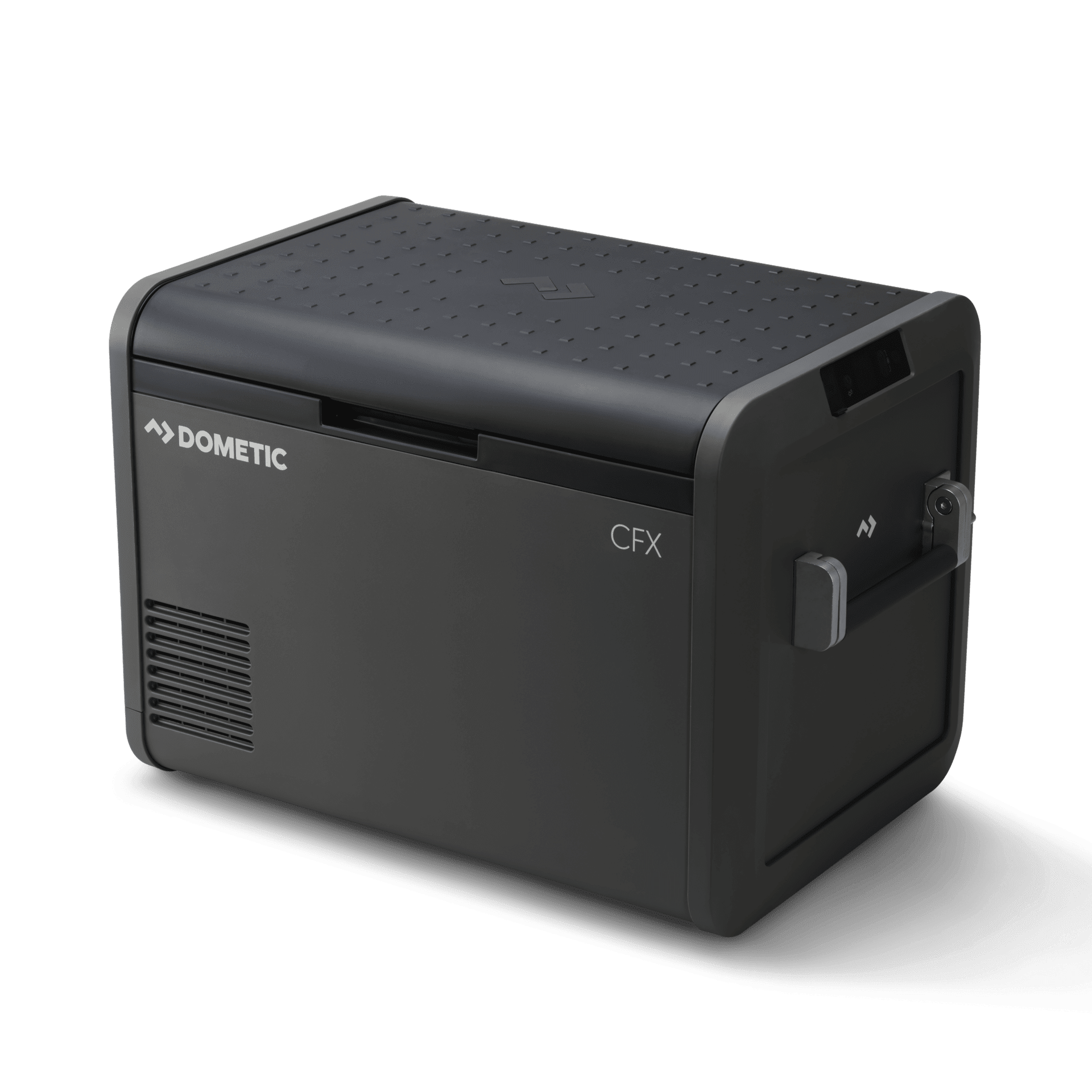
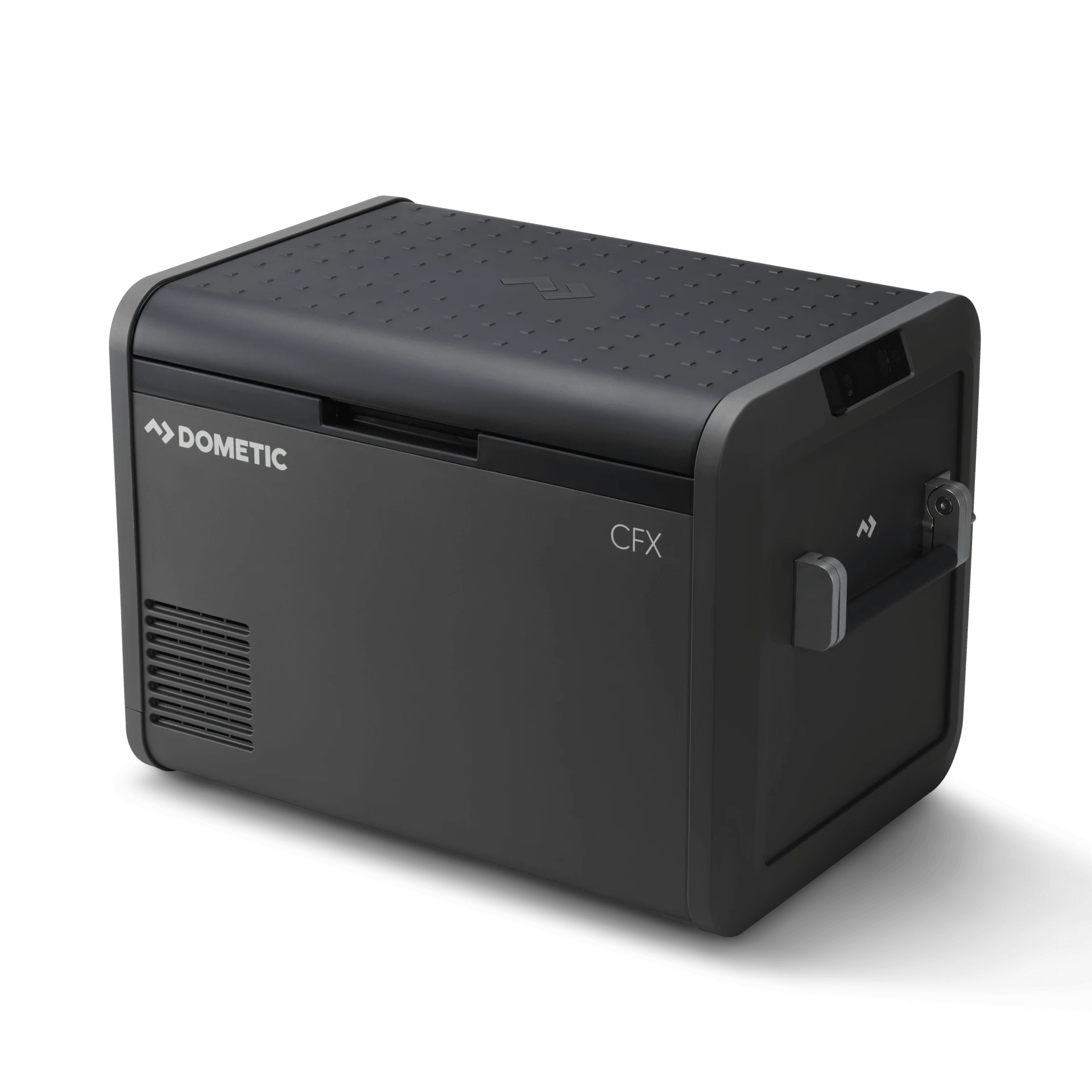
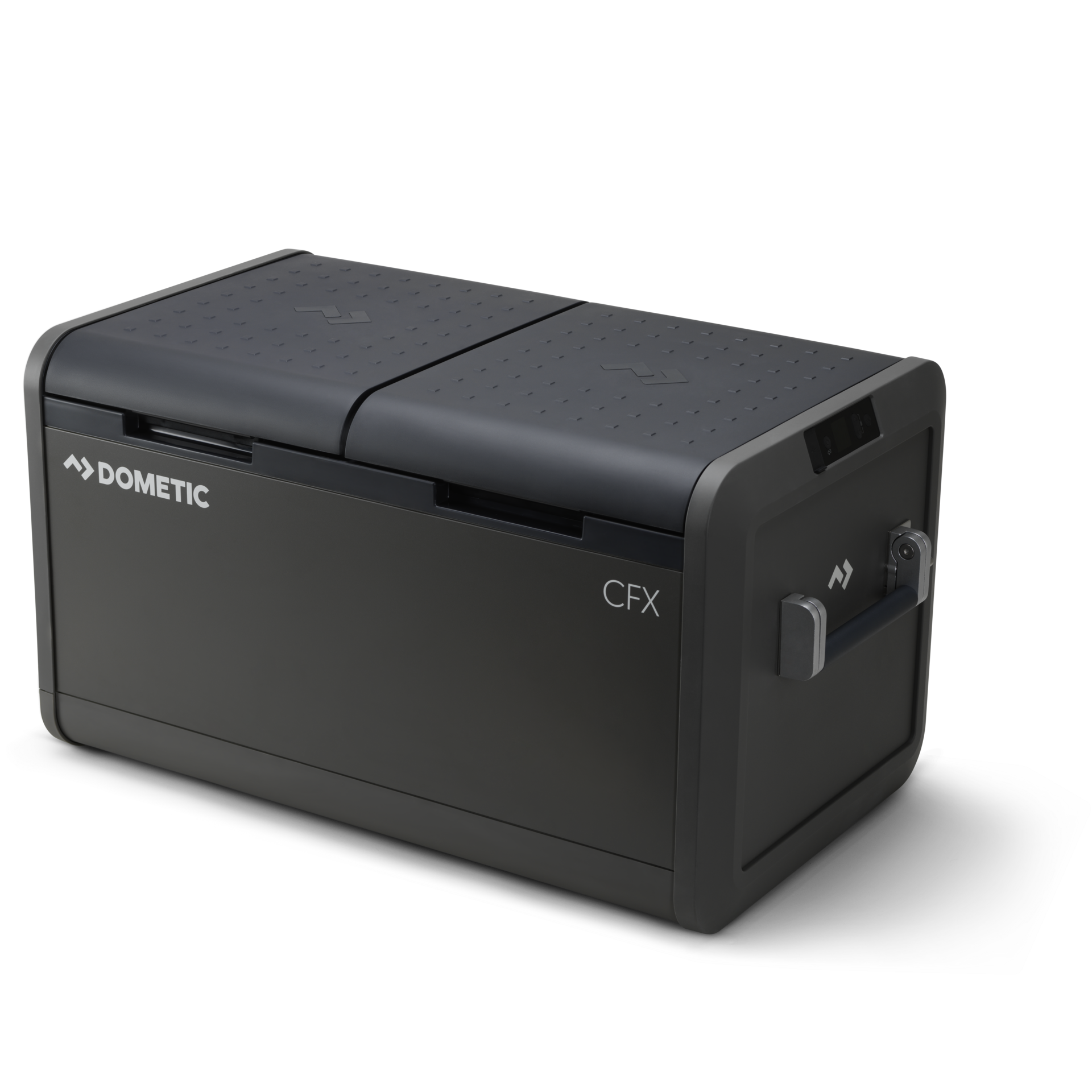
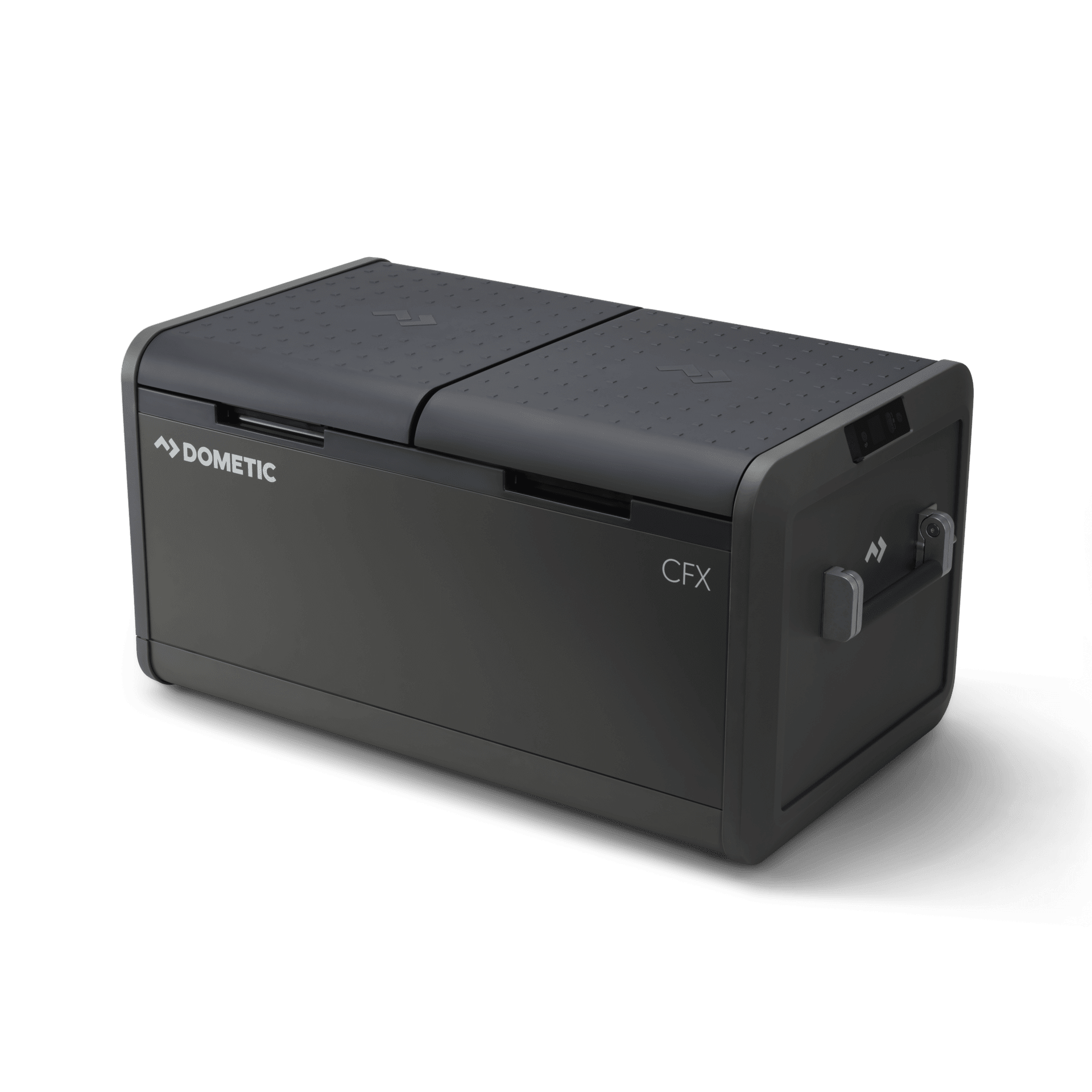
Dometic CFX3 vs CFX5: what’s changed?
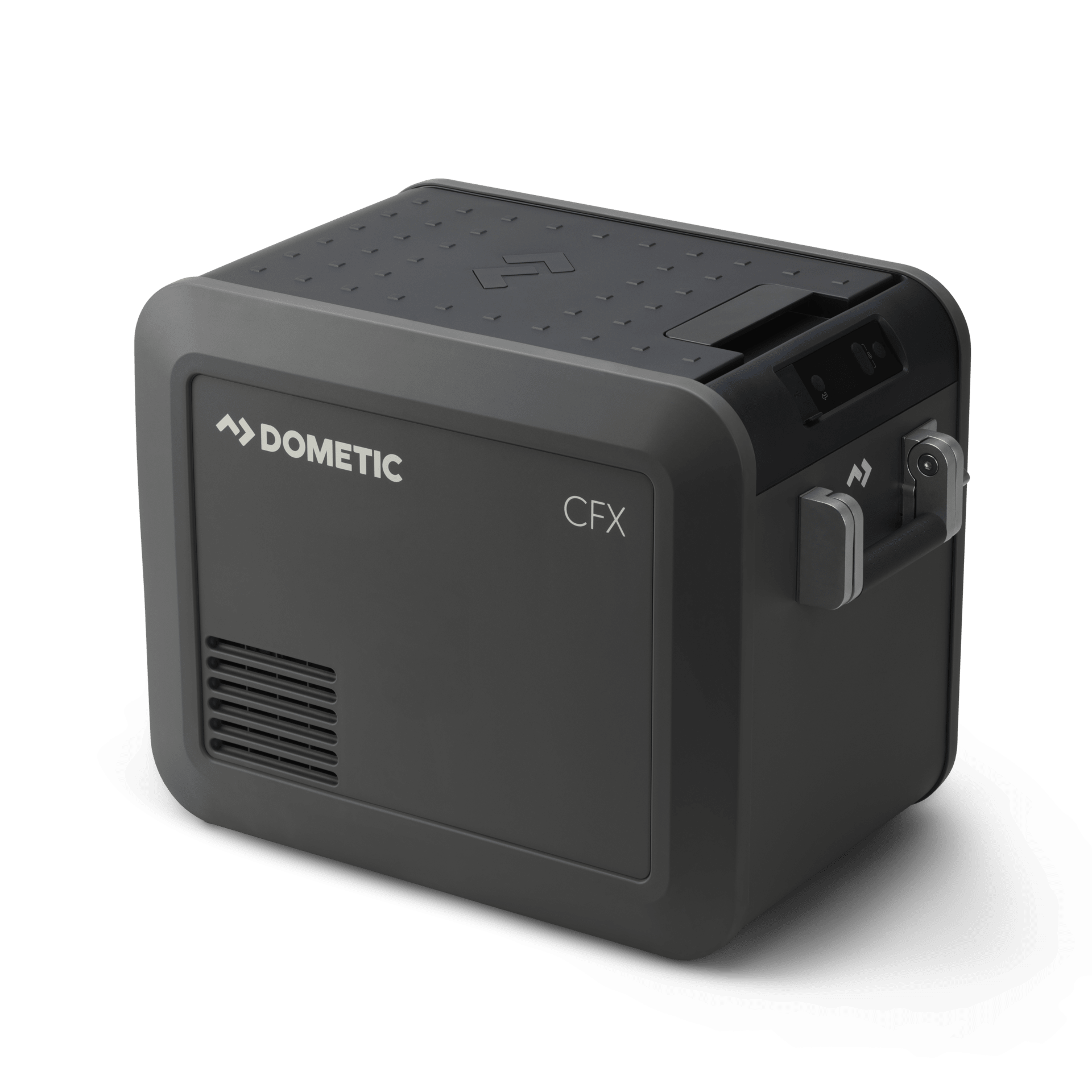
The Dometic CFX5 is the replacement for their CFX3 range, and is Dometic’s current premium CFX compressor coolbox range. Because we’ve used a CFX3 45 in our own campervan for several years, the CFX5 45 is the most useful model for us to compare directly.
At first glance, the two are quite similar. Both have a 46L capacity, can operate as either a fridge or freezer, run from 12/24V DC or mains power, and offer smartphone connectivity.
The biggest changes with the Dometic CFX5 are inside the cooler, where Dometic has focused on improving insulation, efficiency and noise.
| Dometic CFX3 45 | Dometic CFX5 45 | |
| Generation | Previous | Current |
| Gross internal capacity | 46L | 46L |
| Usable storage capacity | 40L | 46L |
| Dimensions (W × H × D) | 694 × 476 × 398 mm | 694 × 476 × 398 mm |
| Weight | 19.4 kg | 18.26 kg |
| Compressor fridge/freezer | Yes | Yes |
| 12/24V DC + mains | Yes | Yes |
| Connectivity | Wi-Fi + Bluetooth | Wi-Fi + Bluetooth |
| Smartphone control | Yes, via Dometic Power app | Yes, via Dometic Power app |
| Lid-open alarm | Yes, after 3 minutes; blinking message on display | Yes, immediate audible door-open alarm and instantaneous app push notifications |
| Insulation | PU foam | Vacuum Insulated Panels |
| Compressor | VMSO3 | VMSO 3.5 |
| Noise emission | 47 dB(A) | 41 dB(A) |
| Temperature range | -22°C to +10°C | -22°C to +20°C |
Better insulation and efficiency
One of the biggest changes to the Dometic CFX5 range is the introduction of Vacuum Insulated Panels, or VIPs. Rather than relying entirely on conventional insulation, the CFX5 uses vacuum panels to reduce heat transfer through the walls of the fridge.
This helps the Dometic CFX5 retain the cold more effectively, whilst also reducing insulation bulk. This is particularly useful in a campervan, where your fridge is one of the loads likely to be running around the clock from your leisure battery.
Updated VMSO 3.5 compressor
The CFX3 45 uses Dometic’s VMSO3 variable-speed compressor, whilst the CFX5 45 moves to the newer VMSO 3.5 system.
The updated compressor is designed to improve performance and energy efficiency by automatically adjusting its speed according to how much cooling is required.
Quieter operation
Dometic’s CFX5 range operates up to 6dB quieter than the CFX3. That might not sound like a dramatic difference on paper, but it can matter in a campervan where the fridge is often only a few metres from where you sleep.
Our CFX3 45 has never struck us as an especially noisy fridge, but reducing compressor noise further is always a worthwhile improvement in such a small space!
More efficient use of space
The Dometic CFX5 45 offers 46L of usable storage capacity, compared with 40L in the CFX3 45, despite both units sharing the same external dimensions of 694 × 476 × 398 mm.
Dometic has achieved this by using thinner, high-efficiency Vacuum Insulated Panels and extending the evaporator further around the interior walls. The slimmer insulation leaves more room inside the fridge, whilst the extended evaporator helps distribute cooling more evenly.
The result is 6 litres of additional storage space without increasing the fridge’s external dimensions.
General overview
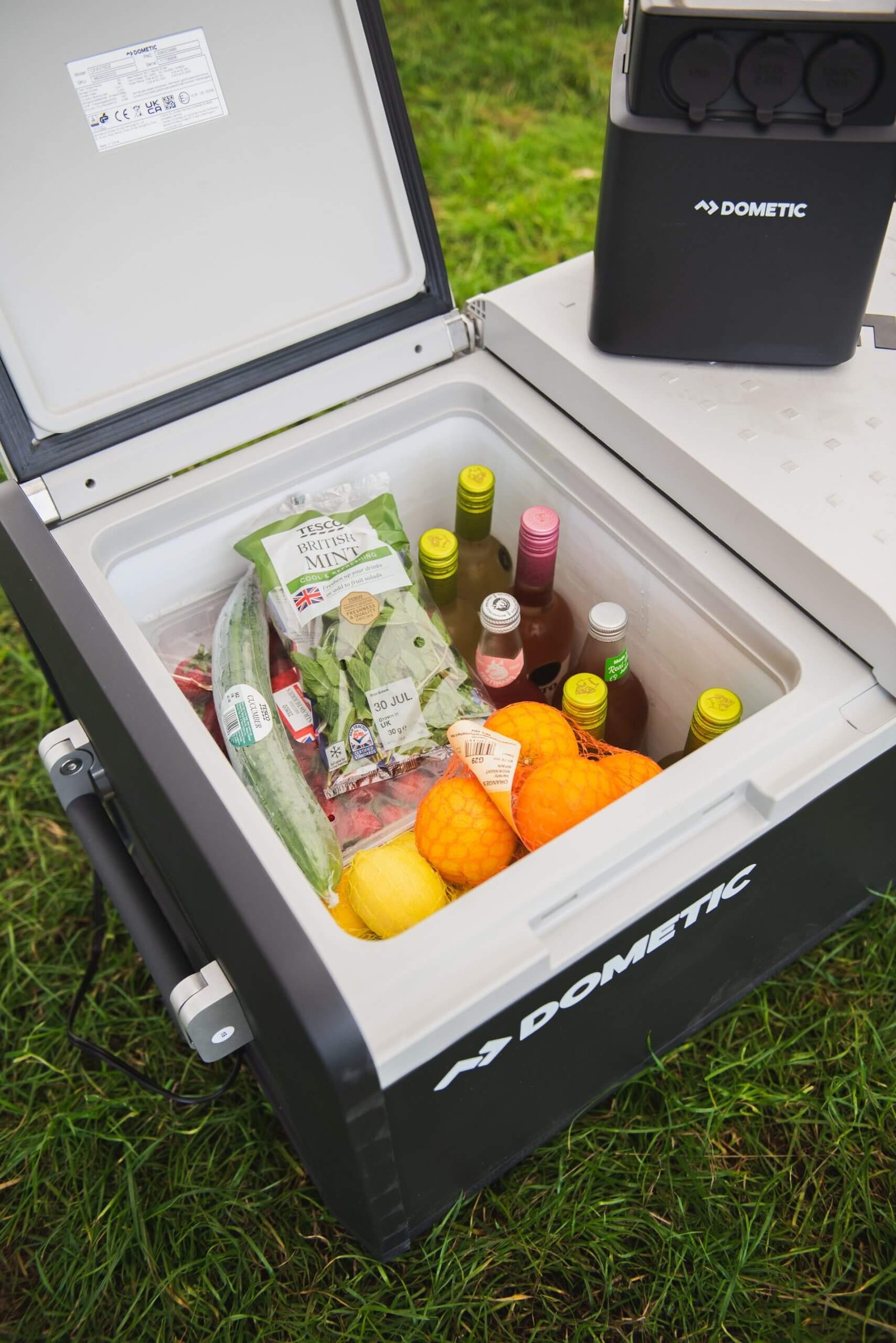
The now-discontinued Dometic CFX3, replaced by the newer Dometic CFX5 range, is a top-loading fridge which can be powered from either a 12V DC or 230V AC source. Its coolbox-style design makes good use of space, as food and drink can be stacked inside rather than arranged on shelves.
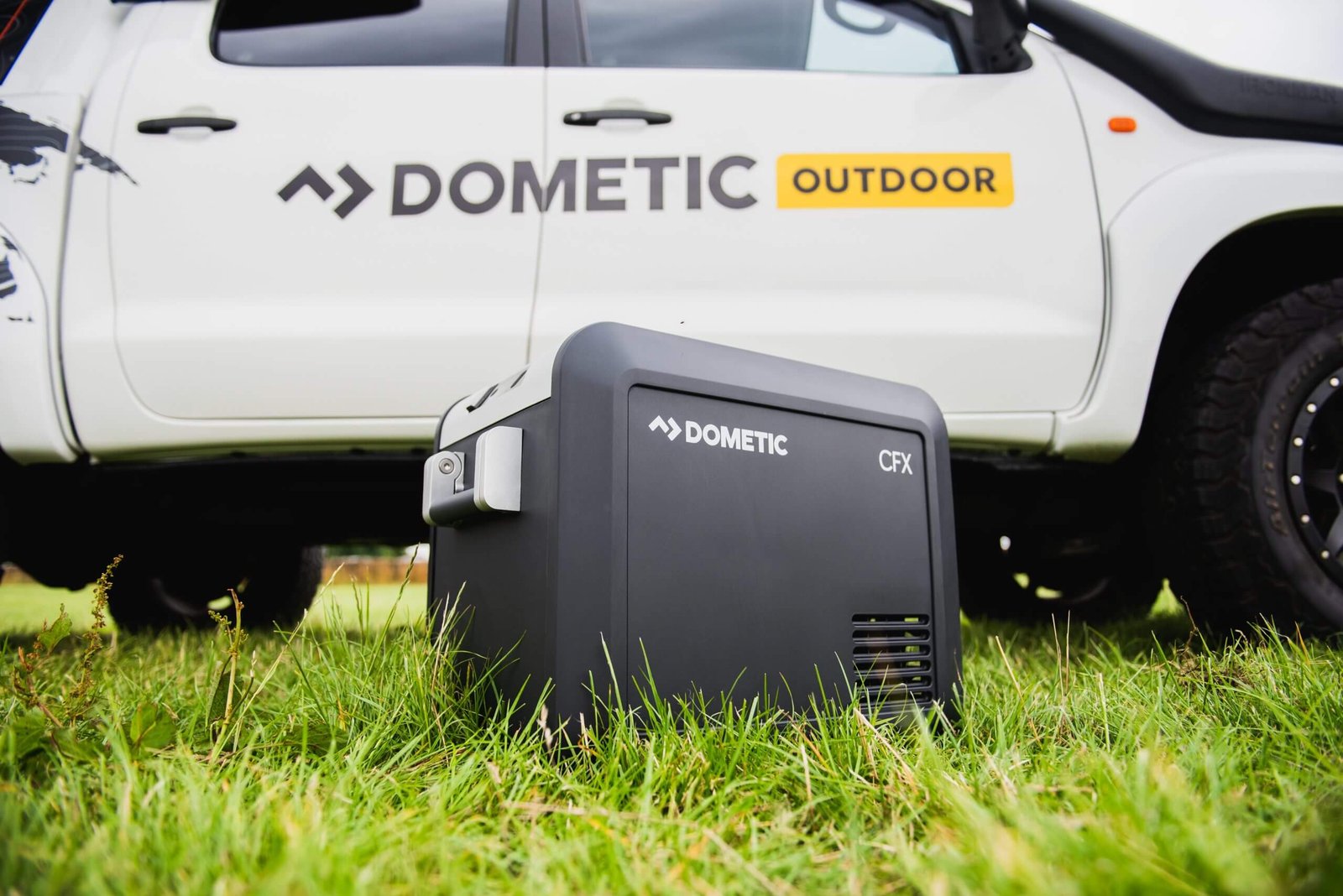
Although the CFX3 and CFX5 might look like a coolbox, it’s actually far more powerful than any fridge you may have used before. The Dometic CFX3 and CFX5 uses a compressor to keep the space cold, which works efficiently and effectively. In contrast, conventional coolboxes are thermoelectric, which means they have limited cooling power and use a lot of energy to run.
This allows it to reach much lower temperatures and makes it suitable for use as either a fridge or freezer.
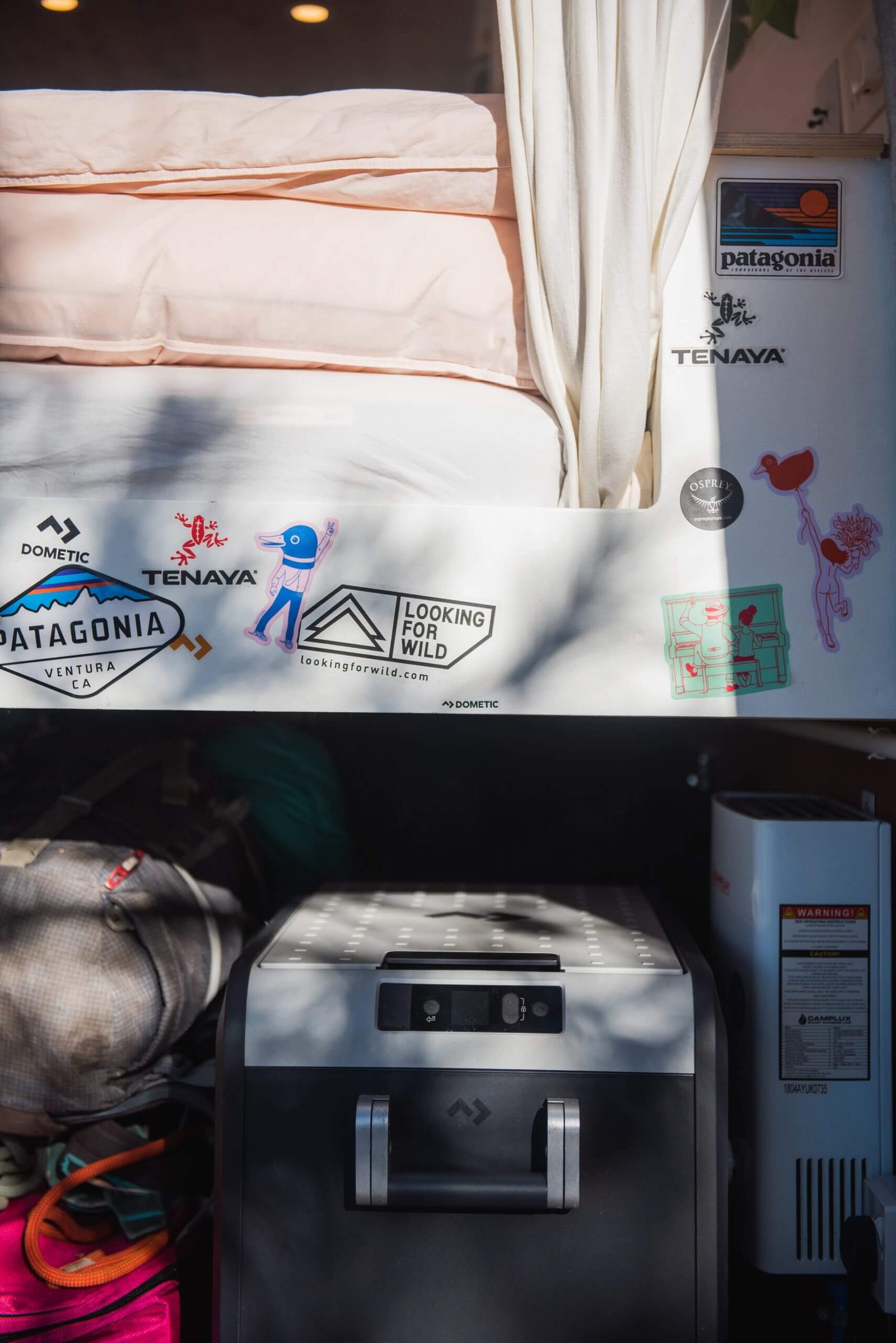
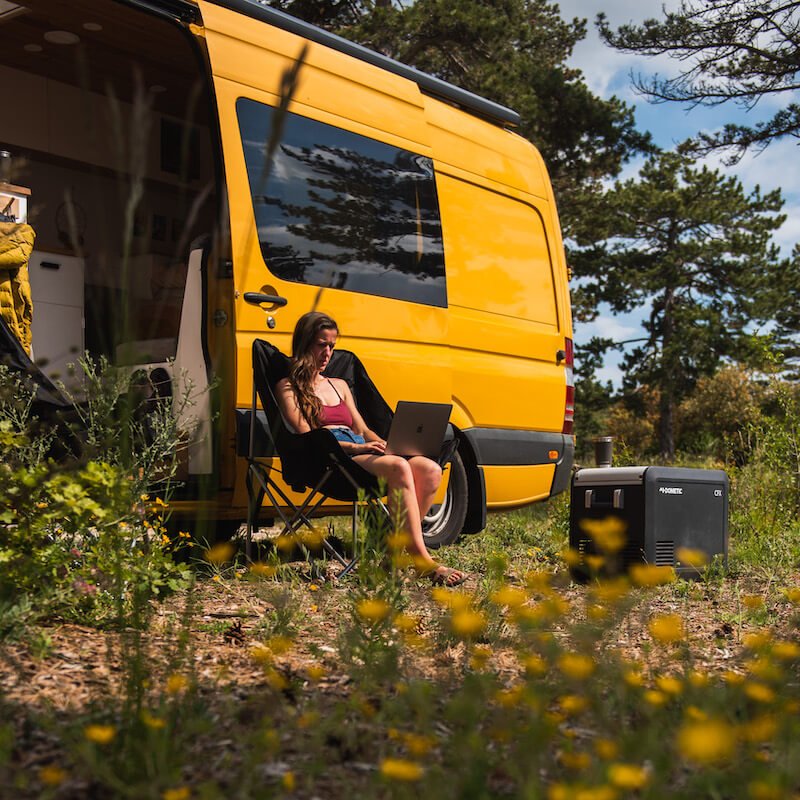
Designed for either inside or outside use, Dometic’s CFX range can be neatly integrated into your campervan build, or just slotted into any spare boot space. Some DIY converters store the fridge under a seat with a lifting lid while others have built a sliding drawer to keep it neatly stashed away.
Most CFX3 models have one main compartment which can be programmed to work as either a fridge or freezer. The Dual Zone models have two separate compartments which can operate at different temperatures. For many people, that extra freezer space is a must-have in the summer, when beers need to be chilled ASAP and ice creams are a necessity.
There were eight different models in the CFX3 range. In this Dometic CFX3 and CFX5 review, we’ll evaluate the range as a whole, then we’ll talk about each model individually.
Usability
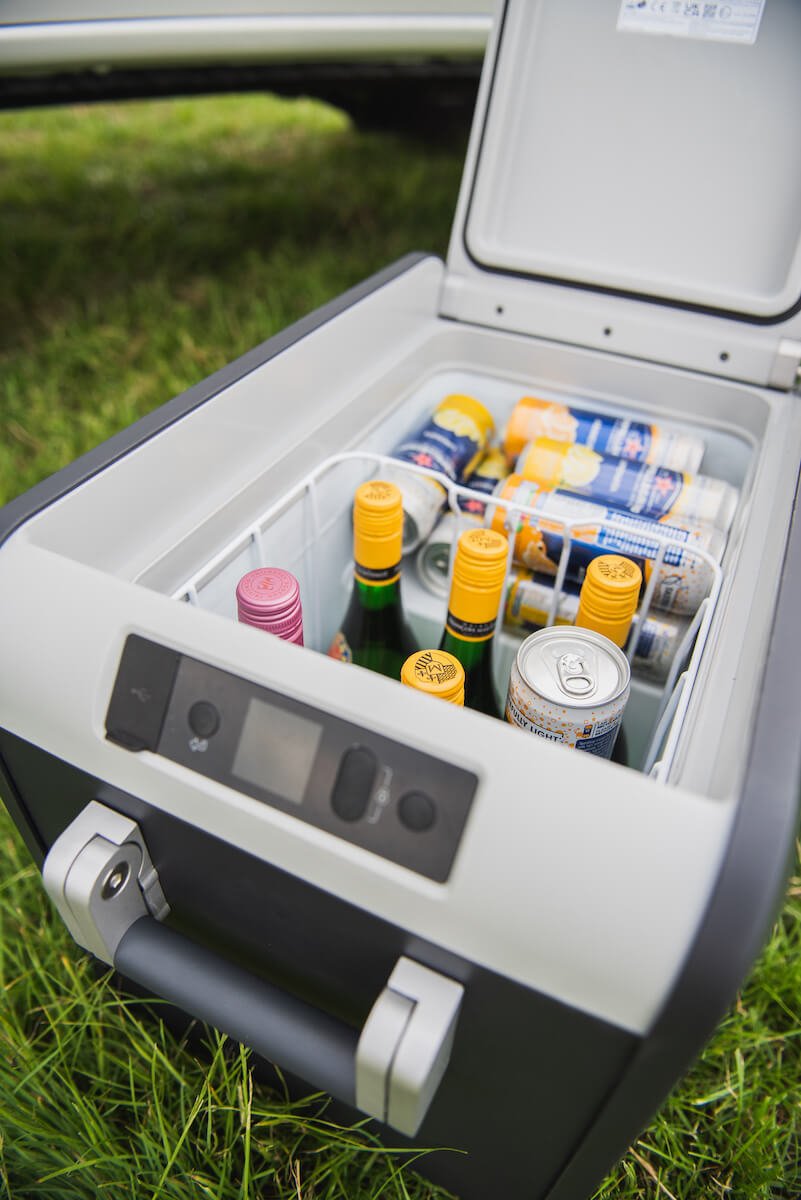
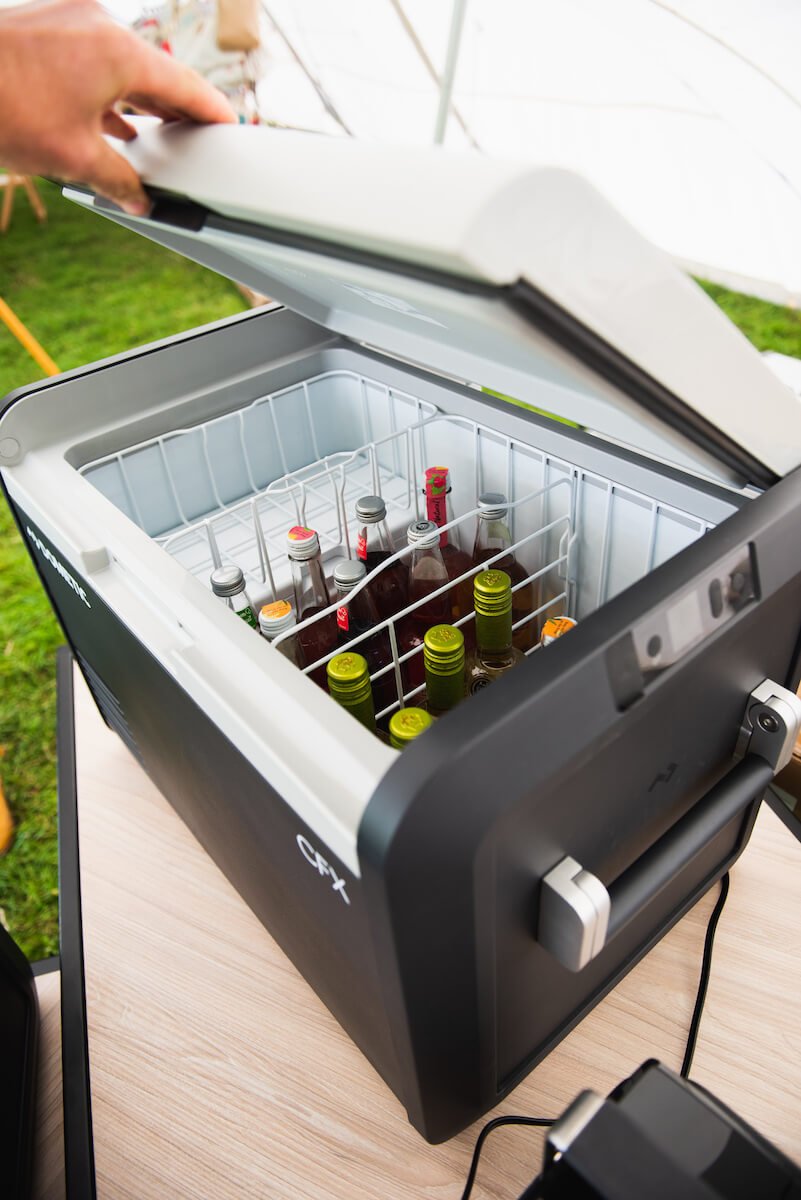
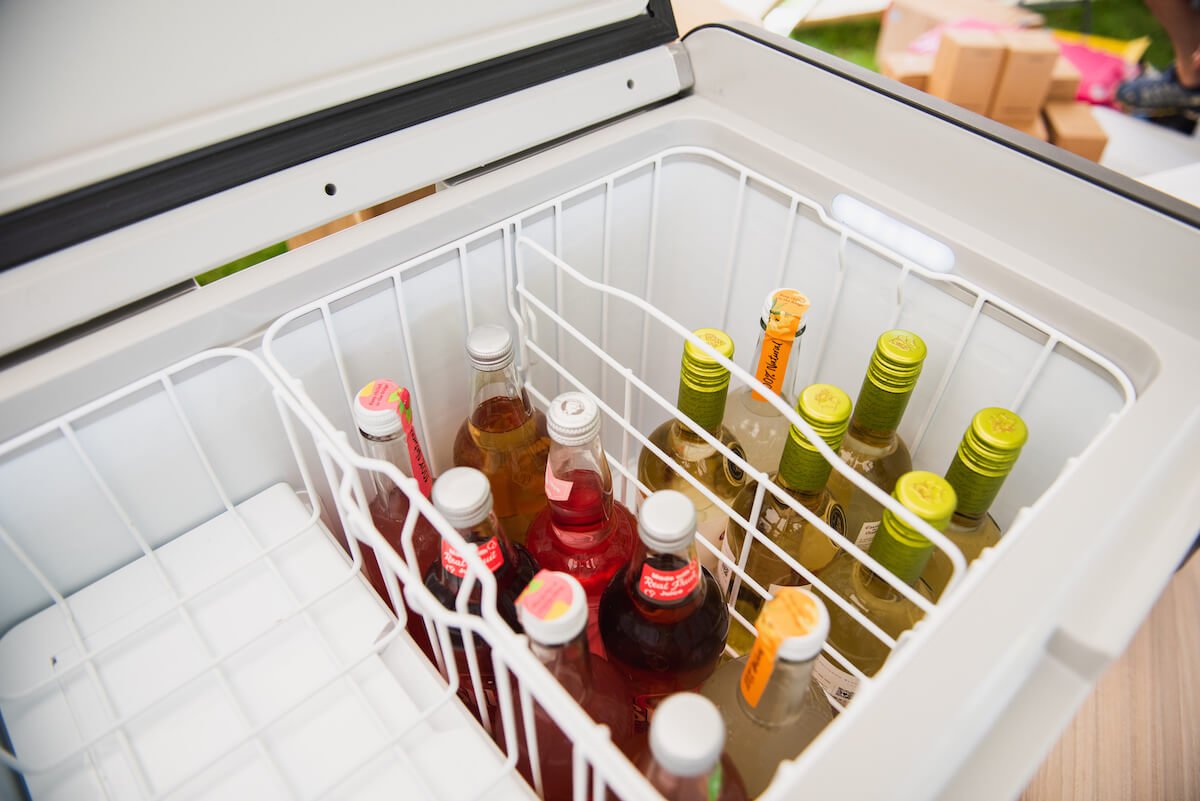
We found the Dometic CFX3 very straightforward to use. Plug it in, set your required temperature and fill it with food. The baskets help keep things organised, whilst the internal light makes it easier to find what you’re looking for in a dimly lit van..

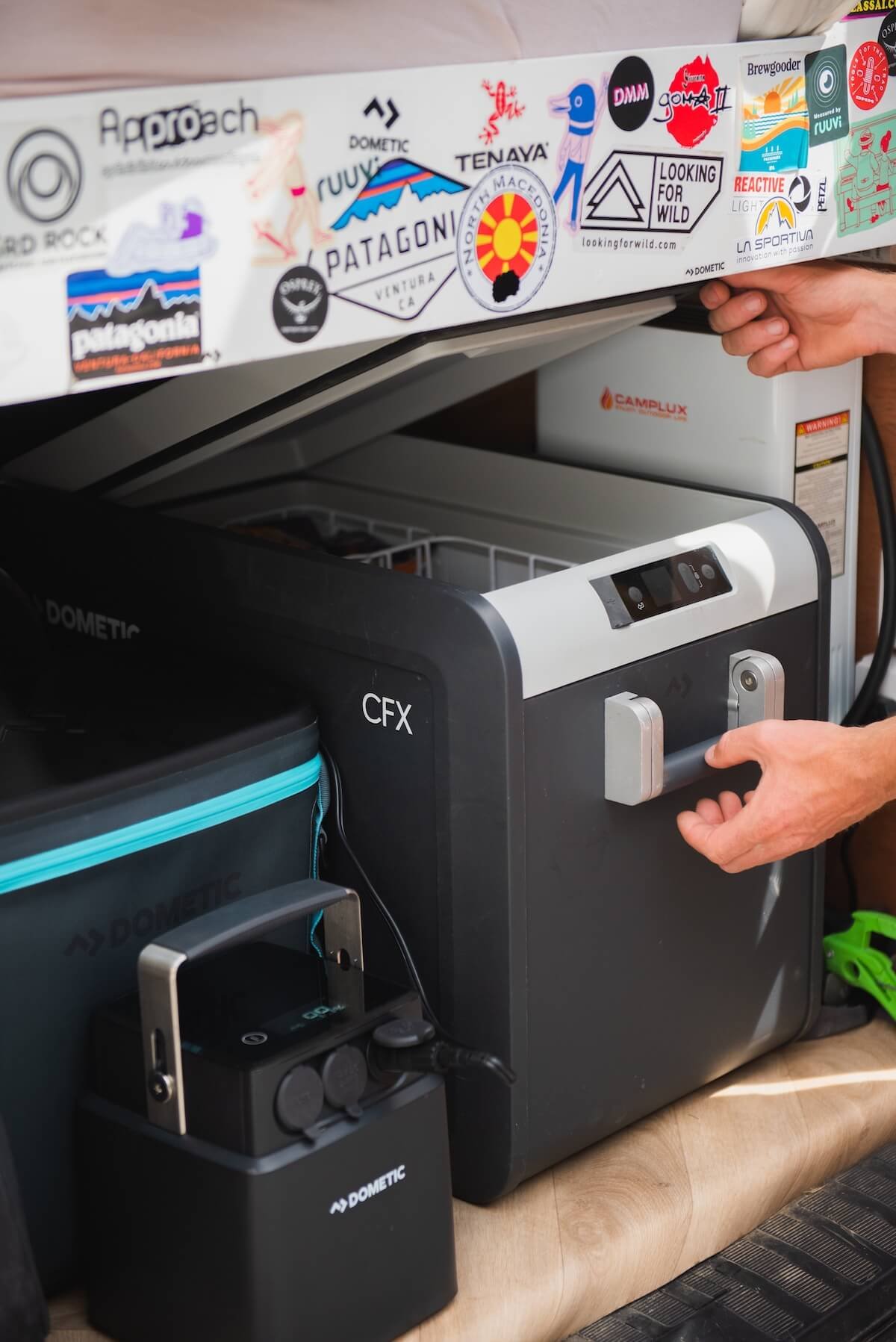
The Dometic CFX3 55 keeping all the important stuff cold!
The chunky design also gives the Dometic CFX3 and CFX5 a reassuringly robust feel. With reinforced edges and substantial carry handles, ours has coped well with the knocks and bumps that come with regular campervan use.
The CFX3 and CFX5 come with two power cables - one for AC mains power and another for DC power. Each cable is 2m long, which gives you some flexibility if you want to position the fridge outside the van. We’re nit-picking a little here, but some extra cable length would have been useful when setting up a cooking area further away.
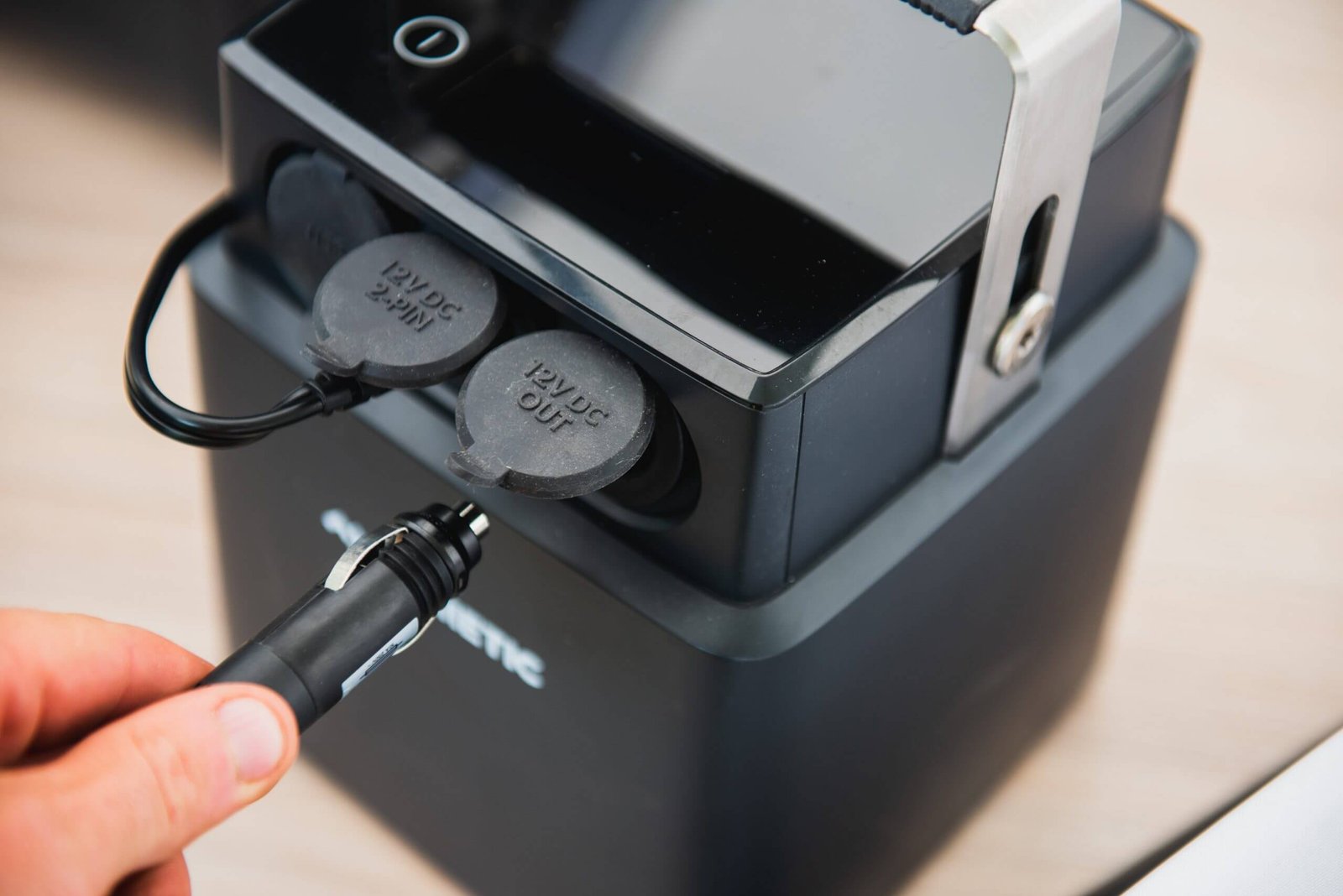
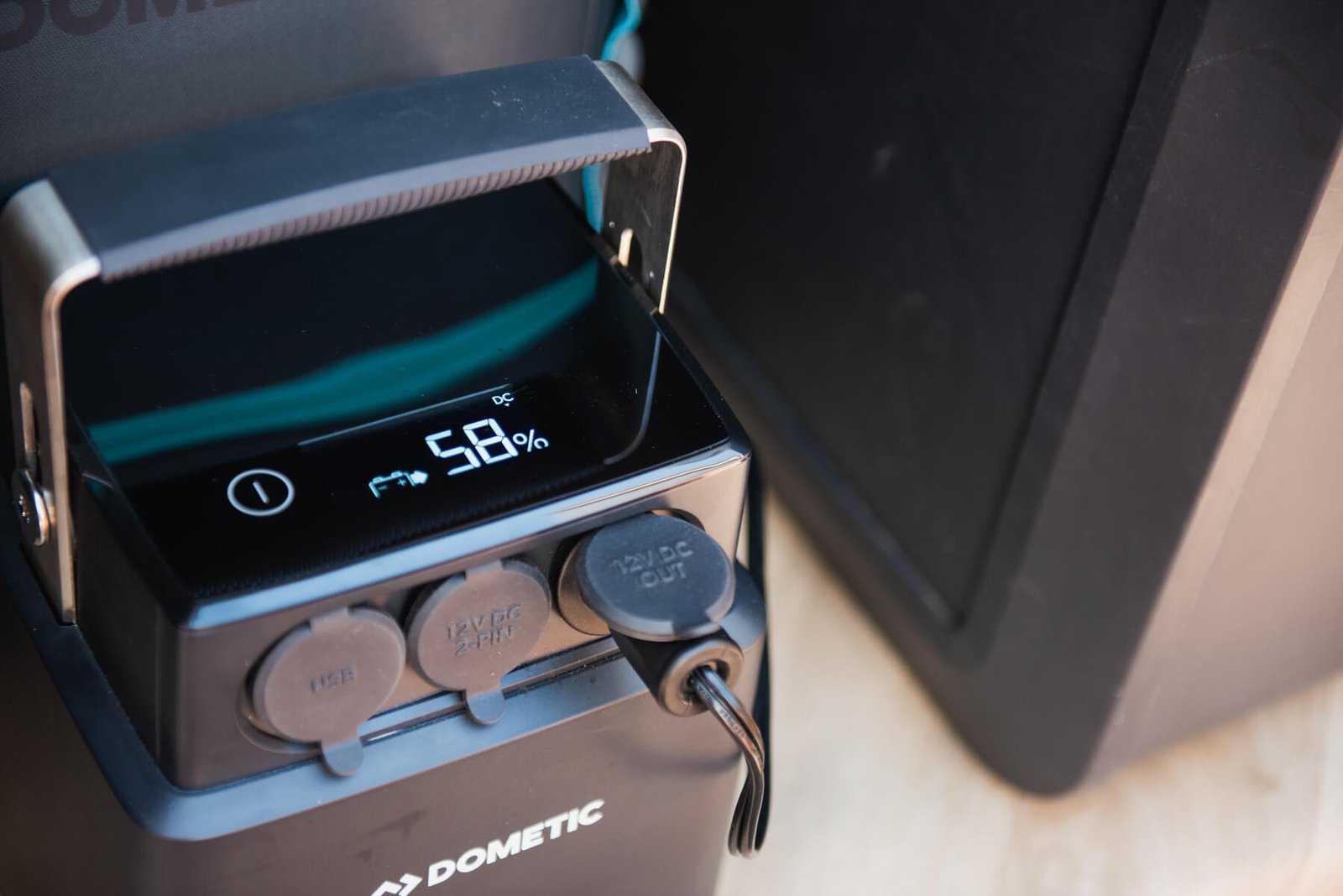
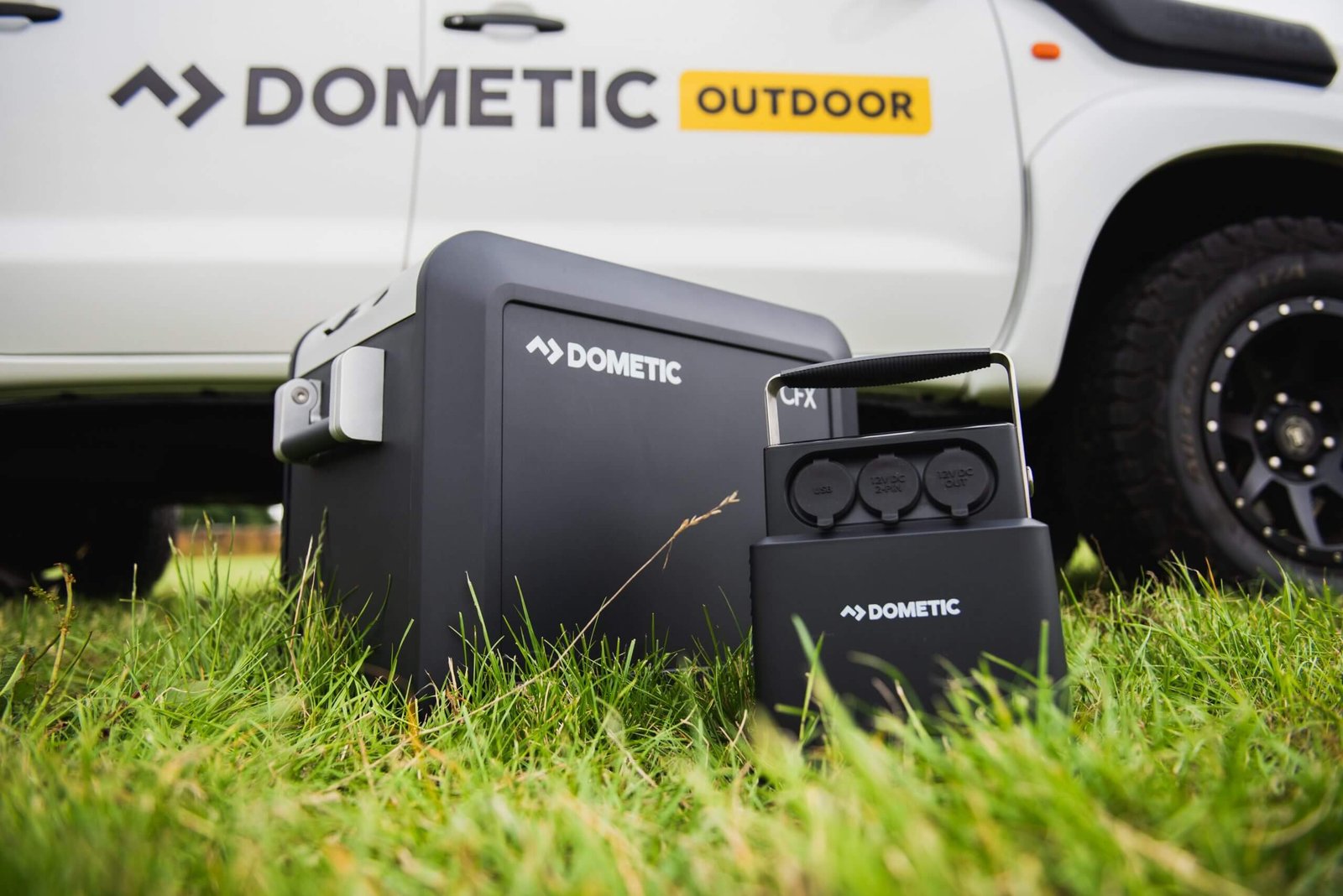
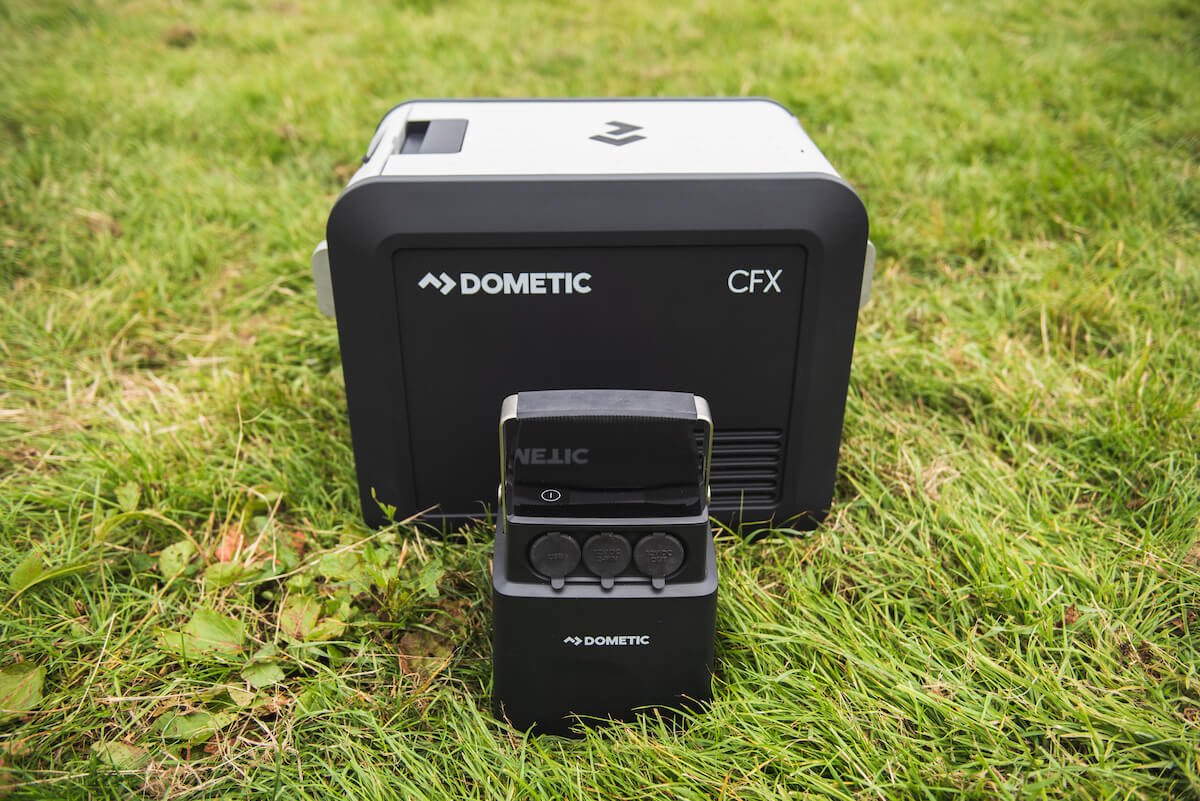
If 2m isn’t quite enough, Dometic also designed the PLB40 portable power station for use with the Dometic CFX range. This gives you more freedom to position the fridge away from your campervan or electric hook-up point.
With the Dometic PLB40 power station, you could power the CFX3 45 for 24 - 48 hours. In fact, with a portable solar panel, you could power your fridge indefinitely with free electricity from the sun.

The Dometic PLB40 will power your CFX3 fridge wherever you take it
Display, app control and settings
The bright LCD display on the Dometic CFX3 shows the fridge temperature, Bluetooth and Wi-Fi status, and the current state of the compressor.
You can access the settings using the fridge’s control buttons. From here, you can set the temperature, adjust the display brightness and use Bluetooth or Wi-Fi to pair the fridge with your phone.
Once paired, you can use the Dometic Power app to control and monitor the fridge. We initially thought an app for your fridge sounded a little unnecessary, but there is one feature we found genuinely useful. If the fridge door hasn’t closed properly, you’ll receive a notification on your phone, saving any chance of melted butter and warm beer!
Another useful feature is the ability to lock the control-panel buttons. This can come in handy if you have an inquisitive toddler travelling with you who loves to press buttons! All you need to do is press and hold both arrow keys at the same time, and the buttons can’t be used until it’s unlocked again.
The Dometic CFX3 and CFX5 also have a battery-protection setting for 12V operation. If the supply voltage drops below the selected threshold, the fridge automatically switches itself off to help prevent excessive battery discharge.
Power input
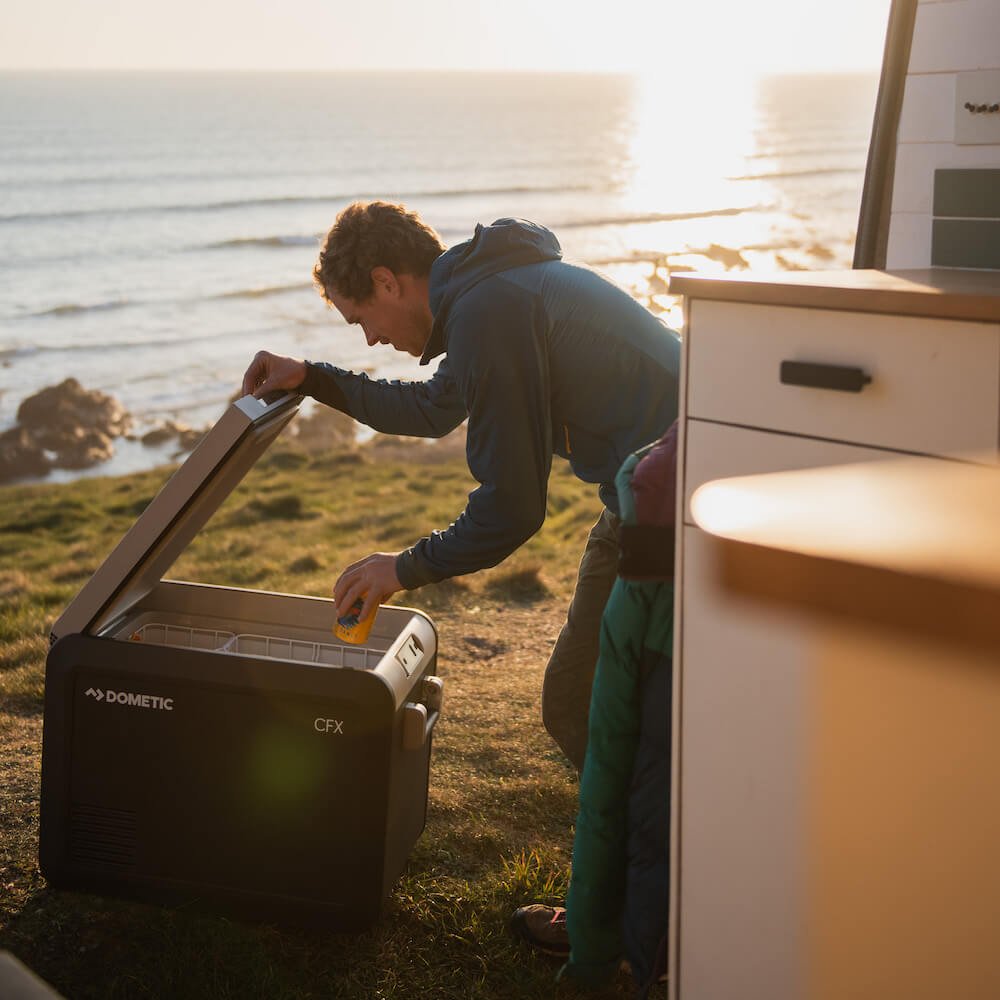
The Dometic CFX3 and CFX5 fridges can run from either DC battery power or AC mains power. That means you can use shore power when you’re on a campsite or run the fridge from your leisure battery when you’re off-grid.
Both versions come with two power cables: a 12V cigarette-lighter-style plug and a mains 3-pin plug.
When you’re parked at a campsite with access to electric hook-up, you can plug the CFX3 and CFX5 into your campervan’s 230V sockets. When you head off-grid, you can switch to a cigarette lighter socket wired into your leisure battery.
If you’re only travelling for a short time between campsites, you can also plug the CFX3 into your vehicle’s cigarette lighter socket whilst driving. We wouldn’t rely on the starter battery to power the fridge with the engine switched off, as you risk draining the battery and leaving yourself with both a warm fridge and a van that won’t start.
The Dometic CFX3 and CFX5 voltage input range is:
- DC: 12 - 24V
- AC: 100 - 240V
This means the CFX3 and CFX5 can accommodate 24V leisure battery systems as well as European and US mains supplies.
Energy consumption
In comparison to other products on the market right now, the energy consumption of the CFX3 is really good. If you intend to use one off-grid, though, you’ll need to make sure your campervan electrical system can comfortably support the additional load.
To make the different models easier to compare, we’ve used Dometic’s published DC energy-consumption figures at an internal temperature of 5°C and an ambient temperature of 25°C. We’ve then converted those figures into an approximate daily consumption from a 12V leisure battery.
However, to compare the data fairly, you need to understand the test ambients. Don’t assume one range is more efficient than another just by glancing at the figures. When Dometic tested these models, they used two very different environments:
- The CFX3 range was tested in a comfortable 25°C ambient temperature.
- The CFX5 range was pushed much harder, tested in a hot 32°C ambient temperature.
Despite facing much hotter testing conditions, the CFX5 models actually draw less power overall. This is thanks to their upgraded Vacuum Insulated Panels (VIP), which keep the heat out much more effectively than standard insulation.
The Dual-Zone Reality Check (75DZ / 95DZ)
When comparing the dual-zone models, you aren't looking at a like-for-like comparison:
- CFX3 data reflects both compartments running lightly as fridges at 5°C.
- CFX5 data reflects true, real-world off-grid use. It simulates a realistic workload by running one side as a fridge (4°C) and the other as a deep freezer (-15°C) at the exact same time.
Keep this workload difference in mind comparing these figures with the Ah capacity of your leisure battery when estimating how long you might be able to stay off-grid.
Here’s a comparison of all the models. (Note - this number will be halved if you have a 24V battery).
Power consumption table (12V DC)
| Model Size | Dometic CFX3 Energy (Wh/24h) | Dometic CFX3 Draw (Ah/day) | Dometic CFX5 Energy (Wh/24h) | Dometic CFX5 Draw (Ah/day) |
| 25 | 440 Wh | 36.7 Ah | 222 Wh | 18.5 Ah |
| 35 | 470 Wh | 39.2 Ah | 222 Wh | 18.5 Ah |
| 45 | 490 Wh | 40.8 Ah | 248 Wh | 20.6 Ah |
| 55 | 560 Wh | 46.7 Ah | 251 Wh | 20.9 Ah |
| 55IM | 590 Wh | 49.2 Ah | 251 Wh (Ice Maker Off) 346 Wh (Ice Maker On) | 20.9 Ah (Ice Maker Off) 28.8 Ah (Ice Maker On) |
| 75DZ | 1,680 Wh | 140.0 Ah | 706 Wh | 58.8 Ah |
| 95DZ | 1,968 Wh | 164.0 Ah | 815 Wh | 67.9 Ah |
| 100 | 910 Wh | 75.8 Ah | Discontinued | Discontinued |
These figures are most useful for comparing the different models rather than predicting exactly what your fridge will consume every day. Actual energy use will vary depending on ambient temperature, your chosen temperature setting, how often you open the lid and whether you’re using the unit as a fridge or freezer.
The difference becomes particularly noticeable with the larger Dual Zone models. If you’re planning to use one off-grid, you’ll need to factor that additional consumption into the size of your leisure battery and charging system. A suitably sized solar panel can help replace some of the energy used during the day.
Campervan electrics leaving you confused?


Should you buy a CFX3 or CFX5?
Our experience with the CFX3 45 has been very good, and the arrival of the Dometic CFX5 certainly doesn’t make it a poor fridge overnight.
If you already own a Dometic CFX3, we wouldn’t replace a perfectly good one simply because a newer model is now available.
However, if you’re buying new today, we’d choose the equivalent CFX5. It keeps the strengths of the CFX3 whilst adding better insulation, an updated compressor, lower noise and improved efficiency.
That said, a CFX3 at a good discount or second-hand can still represent very good value. If the two are similarly priced, however, we’d go for the Dometic CFX5.
Real-world power usage
For many campervans, the fridge will be one of the larger continuous electrical loads and can have a meaningful impact on the size and cost of the electrical system. Choosing an efficient fridge therefore makes a real difference, particularly if you spend a lot of time away from electric hook-up.
We suspected our Dometic CFX3 45 might actually use less energy in our typical conditions than its published figure suggested, so we set up a real-world 24-hour test to find out.
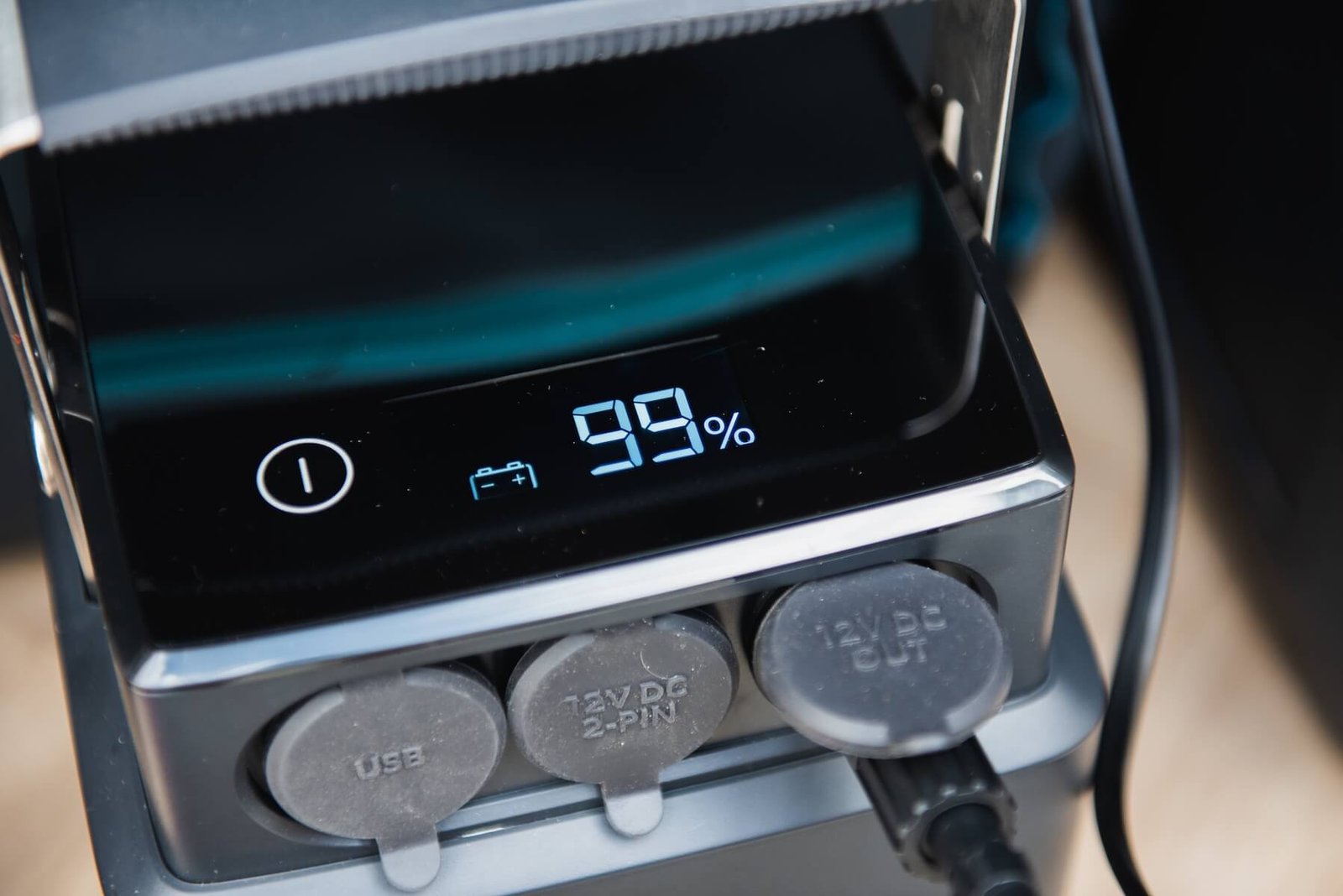
We used the purpose-built Dometic PLB40 12V lithium power bank to power our 45L CFX3 fridge. This allowed us to run the fridge independently, ensuring no other electrical loads affected the results.
We also filled the fridge with food and drink to make the test as representative of normal campervan use as possible.
How we tested it
The test was set to run in our ‘garage’ - our van boot - for a 24-hour period.
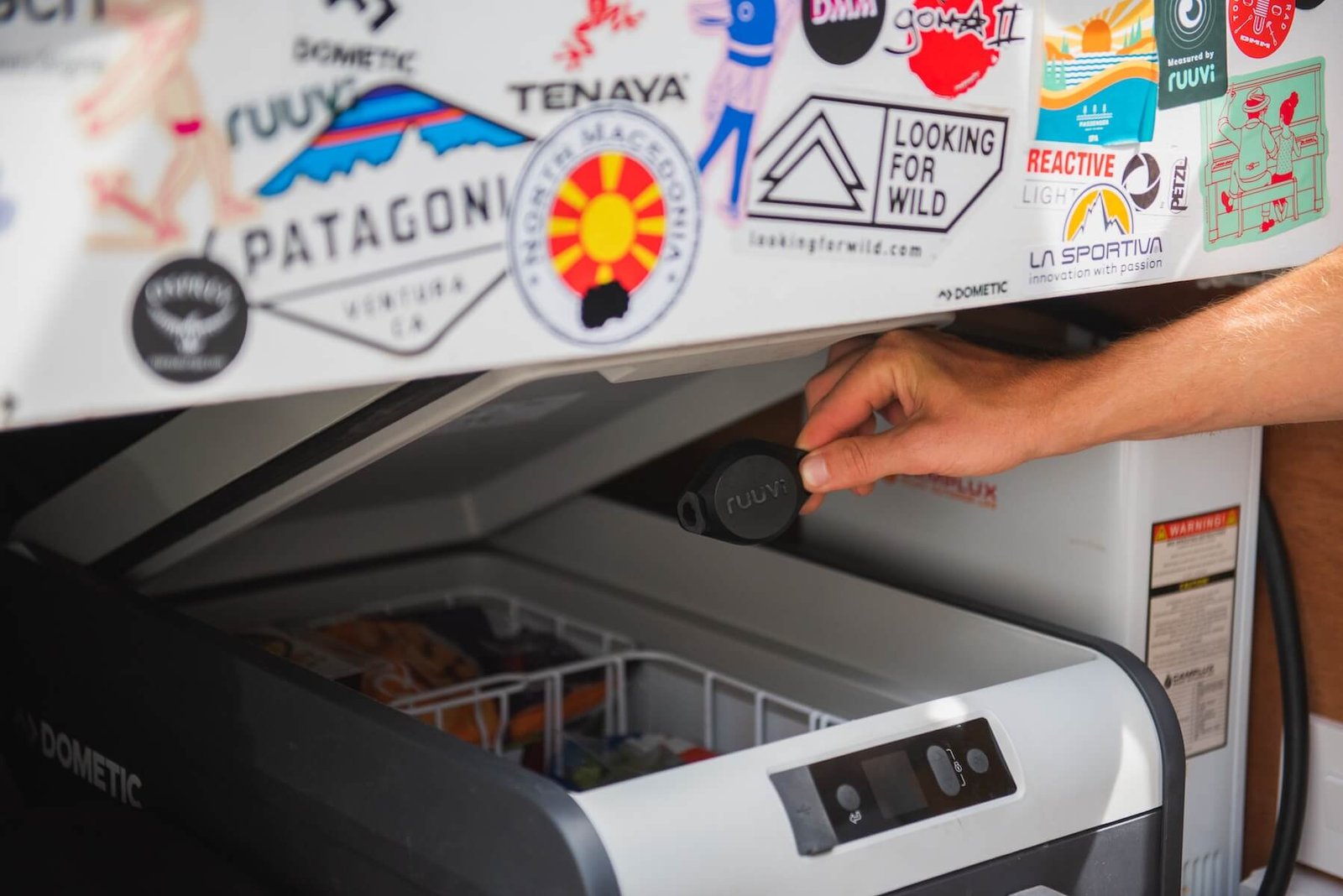
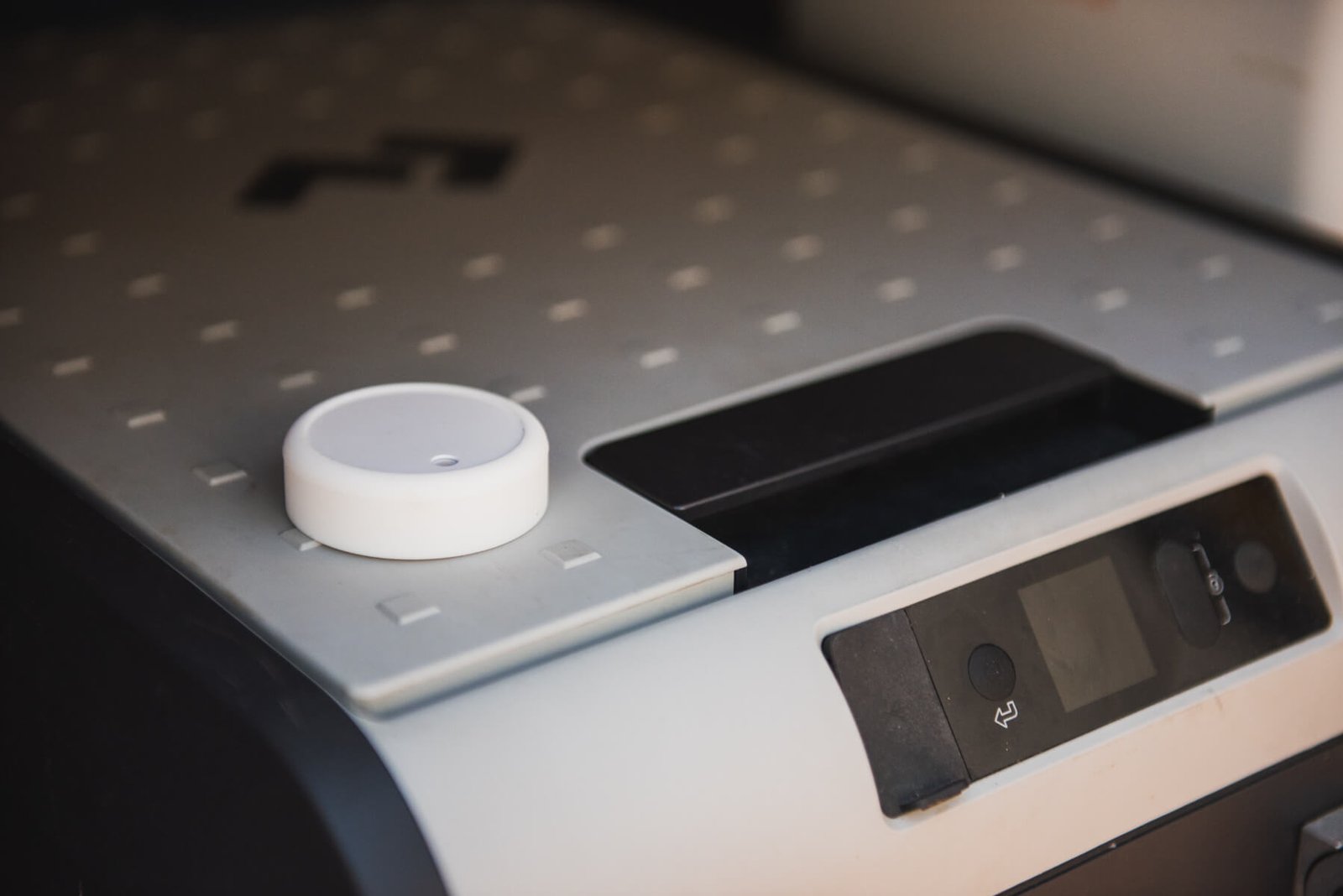
We used two Ruuvi tags alongside our Cerbo GX to monitor:
- the temperature inside the fridge;
- the ambient temperature inside the van; and
- the fridge’s performance throughout the test via the Victron VRM portal.
You can read more about using a Cerbo GX to monitor temperature and other parameters around your campervan in this article.
At midday in the middle of a UK summer, somewhere in the North of England, we switched on the Dometic CFX3 45 and started monitoring the internal and ambient temperatures.
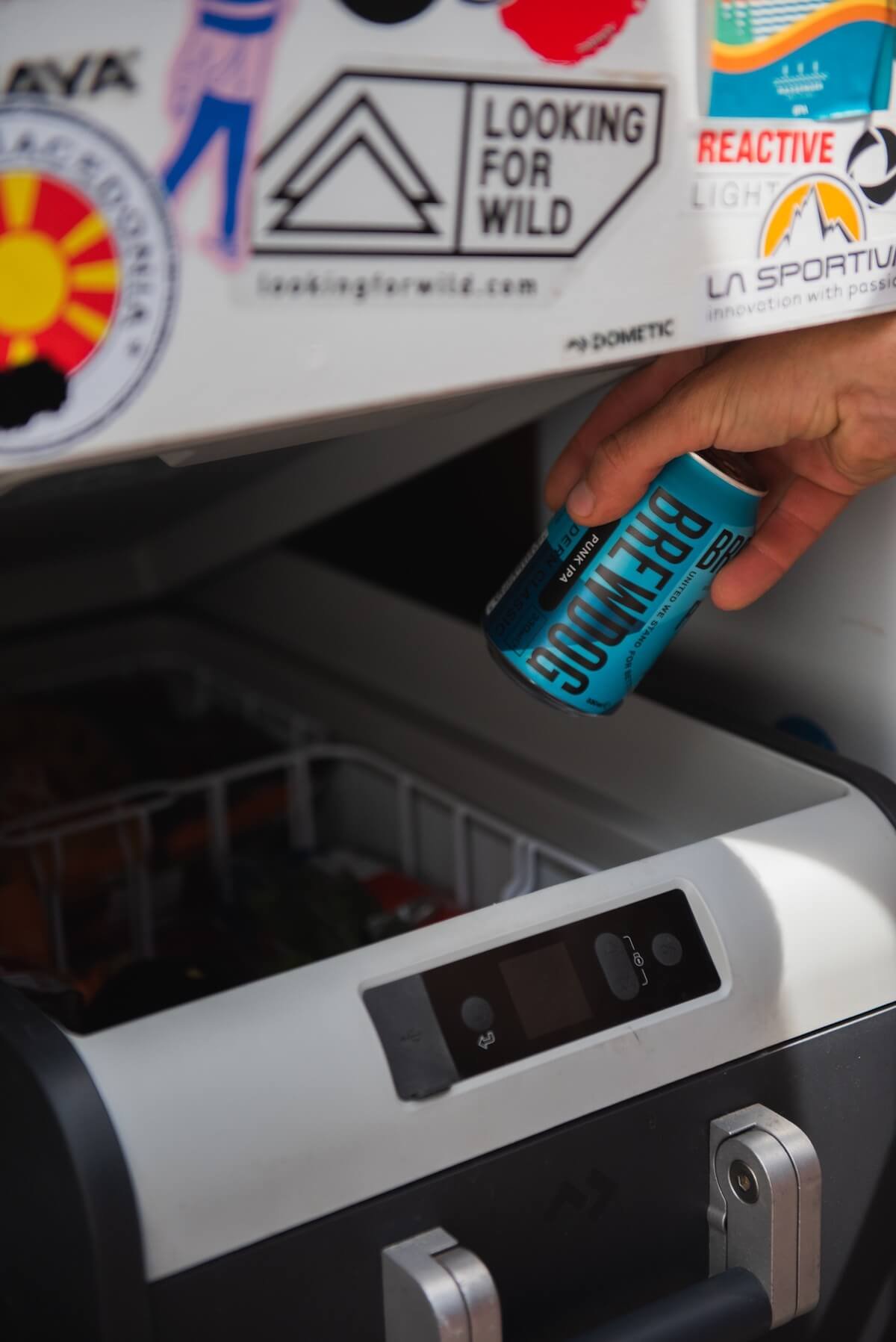
After 24 hours, we stopped the test and grabbed a few beers from the fridge… just to check they were cold.

How much power did the CFX3 45 actually use?
According to the Dometic CFX3 45 datasheet, the fridge uses 0.49kWh, or 490Wh, over 24 hours with an internal temperature of 5°C and an ambient temperature of 25°C.
In our test, the Dometic CFX3 used 278Wh over 24 hours. Our fridge also started the test full of food and drink at ambient temperature, so it had to cool the contents as well as the fridge itself.
For those reasons, we wouldn’t treat this as a direct comparison with Dometic’s laboratory figure. What it does give us is useful first-hand evidence of how the CFX3 45 performed in the UK summer conditions we actually use it in.
We also found that the temperature in our van’s boot, where we keep our CFX3, rarely climbed above 23°C, even when outdoor temperatures were in the high 20s.

Pull-down time and temperature stability
The test also highlighted how quickly the fridge reached its target temperature. The Dometic CFX3 45 cooled from 22.5°C to 5°C in just 50 minutes. It then maintained this temperature within +/-0.3°C for the duration of the test. The CFX3 achieves this using its insulation and variable-speed compressor, which cycles as required to maintain the set temperature.
What did we learn?
Our test recorded 278Wh of energy use over 24 hours, whilst also showing that the CFX3 45 could cool a full load from 22.5°C to 5°C in 50 minutes and then maintain a very stable internal temperature.
It’s difficult to translate one 24-hour test into a universal daily consumption figure because ambient temperature, contents and usage all make a difference. However, it gives us a useful real-world reference point when planning a campervan electrical system for typical UK summer conditions.
It’s also one of the reasons we’re still happy to recommend a good CFX3 at the right price. Despite now being the previous-generation model, our CFX3 45 has proved efficient and capable over several years of real-world use.
Dometic CFX3 and CFX5 energy consumption
Dometic has published energy consumption figures for both the CFX3 and CFX5 ranges, but the test conditions differ between the two generations.
The CFX3 numbers below are based on a 5°C internal temperature and 25°C ambient temperature. The CFX5 figures are based on a 32°C ambient temperature with the fridge empty, so the two ranges shouldn’t be compared directly based on these figures alone.
The actual energy consumption will also vary depending on ambient temperature, temperature settings, how often you open the lid and how much food or drink you’re cooling.
Dometic CFX3 25 and CFX5 25
The CFX3 25 has a published DC energy consumption of 0.44kWh per 24 hours at 5°C internal and 25°C ambient temperature.
When running from 12V, allow approximately 37Ah per day based on Dometic’s published 5°C internal / 25°C ambient consumption figure.
The CFX5 25 has a published average energy consumption of 0.77Ah/h at 12V, with the fridge set to 4°C, Bluetooth on and Wi-Fi off.
Over 24 hours, that works out at approximately 18.5Ah from a 12V leisure battery, or around 0.22kWh per day.
Dometic CFX3 35 and CFX5 35
The CFX3 35 has a published DC energy consumption of 0.47kWh per 24 hours at 5°C internal and 25°C ambient temperature.
When running from 12V, allow approximately 39Ah per day based on Dometic’s published 5°C internal / 25°C ambient consumption figure.
The CFX5 35 has a published average energy consumption of 0.77Ah/h at 12V, with the fridge set to 4°C, Bluetooth on and Wi-Fi off.
That’s approximately 18.5Ah per day from a 12V leisure battery, equivalent to around 0.22kWh over 24 hours.
Dometic CFX3 45 and CFX5 45
The CFX3 45 has a published DC energy consumption of 0.49kWh per 24 hours at 5°C internal and 25°C ambient temperature.
The CFX3 45 uses approximately 41Ah per day from a 12V battery based on Dometic’s published test figure.
As our own 24-hour test above shows, actual consumption can vary considerably depending on the conditions in which you’re using the fridge.
The CFX5 45 has a published average energy consumption of 0.86Ah/h at 12V, with the fridge set to 4°C, Bluetooth on and Wi-Fi off.
Over 24 hours, that equates to approximately 20.6Ah from a 12V leisure battery, or around 0.25kWh per day.
Dometic CFX3 55 and CFX5 55
The CFX3 55 has a published DC energy consumption of 0.56kWh per 24 hours at 5°C internal and 25°C ambient temperature.
With the fridge set to 5°C and an ambient temperature of 25°C, the CFX3 55’s published consumption is approximately 47Ah per day from a 12V leisure battery.
The CFX5 55 has a published average energy consumption of 0.87Ah/h at 12V, with the fridge set to 4°C, Bluetooth on and Wi-Fi off.
That works out at approximately 20.9Ah per day from a 12V leisure battery, equivalent to around 0.25kWh over 24 hours.
Dometic CFX3 55IM and CFX5 55IM
The CFX3 55IM has a published DC energy consumption of 0.59kWh per 24 hours at 5°C internal and 25°C ambient temperature.
That’s approximately 49Ah per day from a 12V leisure battery.
We can also give you an idea of the maximum energy the CFX3 55IM might use. In a 32°C ambient temperature, with the ice maker on and the fridge set to 4°C, the CFX3 55IM will use 1.2kWh, or 1,200Wh, per 24 hours.
This is equivalent to drawing 100Ah every day from a 12V leisure battery, which equals an average current draw of 4.17A across a 24-hour cycle.
With the fridge set to 4°C, Bluetooth on and Wi-Fi off, the CFX5 55IM has a published average energy consumption of 0.87Ah/h at 12V with the ice maker not in use.
That equates to approximately 20.9Ah per day from a 12V leisure battery, or around 0.25kWh per 24 hours.
With the ice maker switched on and maintaining ice, published consumption rises to 1.20Ah/h. That’s approximately 28.8Ah per day from a 12V battery, or around 0.35kWh over 24 hours.
Dometic CFX3 75DZ and CFX5 75DZ
With both compartments being used for cooling, the CFX3 75DZ has a published DC energy consumption of 1.68kWh per 24 hours at 5°C internal and 25°C ambient temperature.
That’s approximately 140Ah per day from a 12V leisure battery.
We can also give you an idea of the maximum energy the CFX3 75DZ might use. In a 32°C ambient temperature, with the freezer compartment set to -15°C and the fridge set to 4°C, the CFX3 75DZ will use 3.04kWh, or 3,040Wh, per 24 hours.
This is equivalent to drawing 253.3Ah every day from a 12V leisure battery, which equals an average current draw of 10.56A across a 24-hour cycle.
The CFX5 75DZ uses different test conditions because of its dual-zone design. With the larger compartment set to 4°C and the smaller compartment set to -15°C, Dometic publishes an average consumption of 2.45Ah/h at 12V, with Bluetooth on and Wi-Fi off.
That works out at approximately 58.8Ah per day from a 12V leisure battery, equivalent to around 0.71kWh over 24 hours.
Bear in mind that this figure represents simultaneous refrigeration and freezing, rather than both compartments being used purely as fridges.
Dometic CFX3 95DZ and CFX5 95DZ
The CFX3 95DZ has a published DC energy consumption of 1.97kWh per 24 hours at 5°C internal and 25°C ambient temperature.
That’s approximately 164Ah per day from a 12V leisure battery.
We can also give you an idea of the maximum energy the CFX3 95DZ might use. In a 32°C ambient temperature, with the freezer compartment set to -15°C and the fridge set to 4°C, the CFX3 95DZ will use 3.57kWh, or 3,570Wh, per 24 hours.
This is equivalent to drawing 297.5Ah every day from a 12V leisure battery, which equals an average current draw of 12.40A across a 24-hour cycle.
Again, that’s a significant load if you’re camping away from electric hook-up, so you’ll want plenty of battery capacity and a suitable way of replacing that energy each day.
With the larger compartment set to 4°C and the smaller compartment set to -15°C, the CFX5 95DZ has a published average consumption of 2.83Ah/h at 12V, with Bluetooth on and Wi-Fi off.
Over 24 hours, that equates to approximately 67.9Ah from a 12V leisure battery, or around 0.82kWh per day.
As with the CFX5 75DZ, this figure is based on using the two compartments simultaneously as a fridge and freezer, so actual consumption will depend heavily on how you use each compartment.
Dometic CFX3 100
The CFX3 100 has a published DC energy consumption of 0.91kWh per 24 hours at 5°C internal and 25°C ambient temperature.
That’s approximately 76Ah per day from a 12V leisure battery.
We can also give you an idea of the maximum energy the CFX3 100 might use. In a 32°C ambient temperature with the unit set to a deep-freeze temperature of -15°C, energy consumption climbs to roughly 1.34kWh, or 1,340Wh, per 24 hours.
This is equivalent to drawing 111.7Ah every day from a 12V leisure battery, which equals an average current draw of 4.65A across a 24-hour cycle.
Despite having a slightly greater overall capacity than the CFX3 95DZ, its single-zone design uses substantially less energy under these published test conditions.
The CFX3 25 has a rated energy consumption of 330Wh per 24hrs. In other words, 28Ah will be drawn every day from a 12V leisure battery. (Based on a fridge temperature of 5oC and an ambient temperature of 25oC)

Recommended usage
The CFX3 range came in a wide variety of sizes, making it suitable for everything from short weekend trips to longer family holidays.
These recommendations are still useful if you already own a Dometic CFX3 or are considering a second-hand one, but if you’re buying new, it’s worth comparing the equivalent Dometic CFX5 model first.
The compact CFX3 25 and CFX3 35 and their newer counterparts, the CFX5 25 and CFX5 35 are perfect for one or two people heading out for a long weekend. Their smaller physical footprint makes them easy to shift in and out of a boot or van drawer. They also feature a lower energy consumption profile and are much easier to accommodate within a modest off-grid electrical setup.
For couples heading away on week-long trips, the CFX3 45 and CFX3 55 and the updated CFX5 45 and CFX5 55 hit the ideal middle ground. They provide enough storage space for a substantive food shop without becoming too heavy or unwieldy to move when needed.
Larger models such as the CFX3 100 make more sense if you’re feeding a family or want to stock up for a longer trip without regular supermarket stops. They’re straightforward to power when you have access to 230V hook-up, but their higher energy consumption needs more consideration if you intend to use them off-grid.
The CFX3 100 does not have a direct CFX5 100 replacement, so new buyers should compare the current Dometic CFX5 range based on the capacity and layout they actually need.
Dual-zone models like the Dometic CFX3 75DZ and 95DZ, along with their upgraded counterparts, the CFX5 75DZ and 95DZ, suit people who want separate fridge and freezer compartments.
This layout is incredibly useful for long summer trips where you want to keep fresh food chilled on one side while keeping frozen goods or ice creams solid on the other. However, keeping two separate zones running at different temperatures comes with a considerable increase in energy use. Because of this extra power draw, you’ll want to make sure your battery and charging system are sized accordingly.
Neither range is locked strictly to campervan life. Thanks to their flexible 12V DC and 230V AC auto-switching capabilities, a rugged compressor cool box makes an incredibly useful overflow drinks fridge at home for summer barbecues, parties, or large family gatherings.
45L
Two peoples food for a long weekend
Dometic CFX3 and CFX5 limitations
We’ve been impressed with the CFX3 over the years, but there are a few drawbacks worth considering, particularly now that the newer CFX5 range is available.
The first is energy consumption, especially on the larger models. If you spend a lot of time off-grid, the fridge can account for a meaningful proportion of your daily electrical usage.
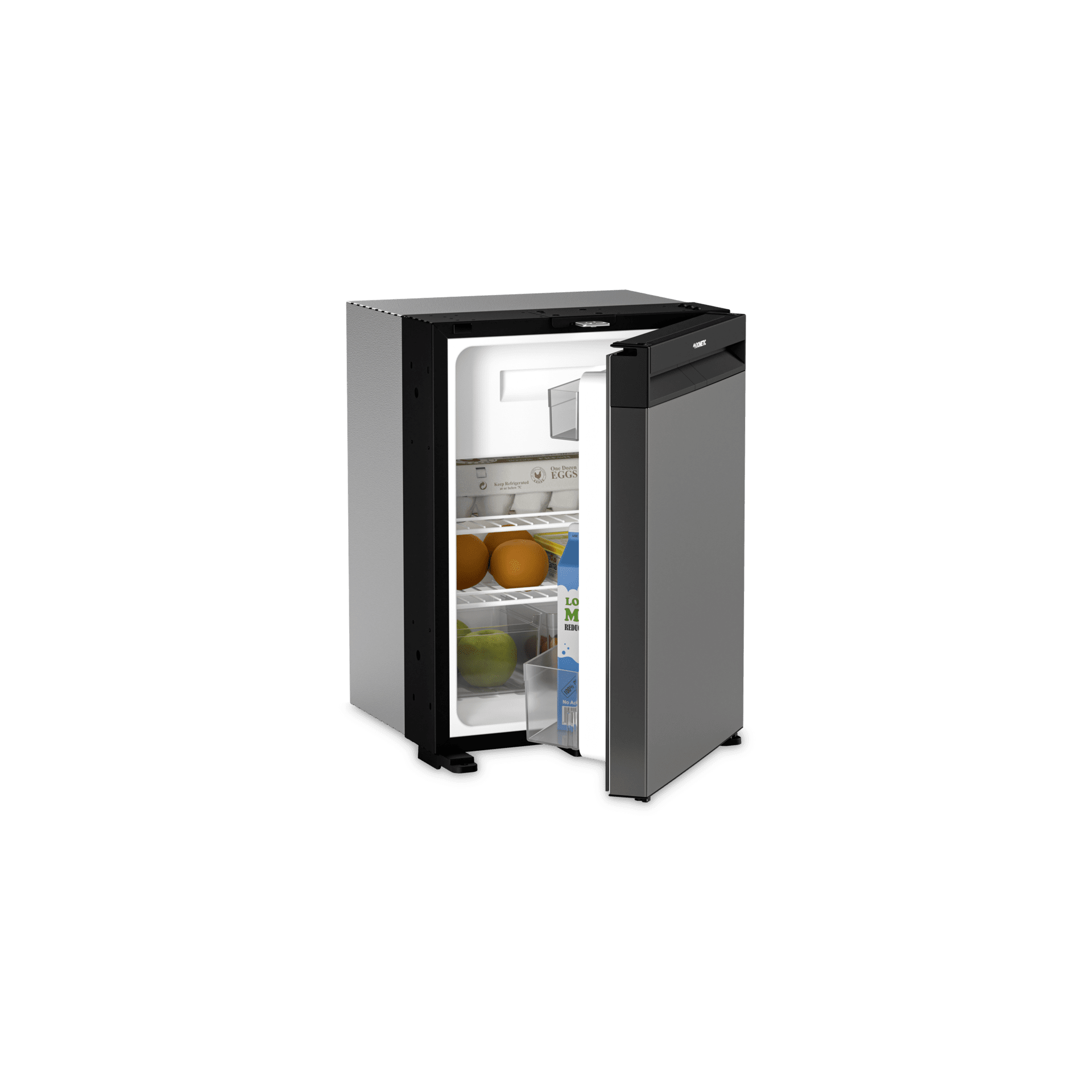
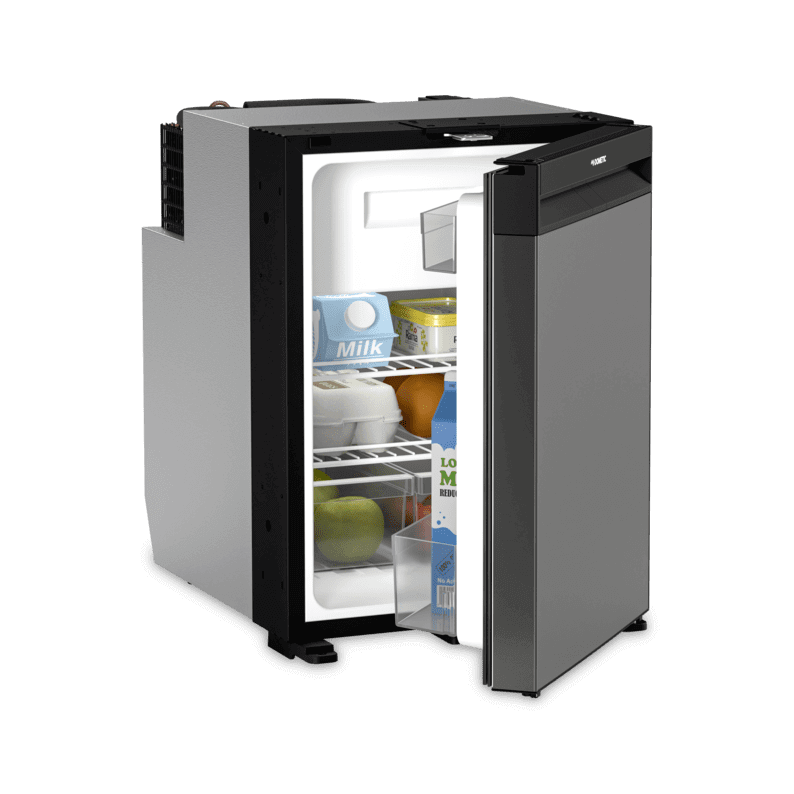
Depending on the type of campervan layout you’re building, a Dometic CRX fridge or their updated version the Dometic NRX may be worth considering instead.
The Dometic CRX and NRX fridges are front-opening units designed to be permanently built into a campervan kitchen. If you prefer a fixed kitchen layout and don’t need the portability of a Dometic CFX, that style of fridge may suit you better.
Size is another consideration. Some of the larger CFX3 models are substantial units and become very heavy once filled with food and drink. If you’re planning to use one inside your campervan most of the time, it makes sense to give it a dedicated location rather than regularly moving it around. The same is worth bearing in mind when choosing one of the larger CFX5 models.
We’ve also occasionally missed the convenience of a fridge with organised shelves. Top-loading fridges are excellent for fitting a lot of food into a relatively small footprint, but you may find yourself digging around for the item that has inevitably ended up right at the bottom.
If you prefer the feel and organisation of a conventional kitchen fridge, the CRX or NRX range may be a better fit.
Since the Dometic CFX3 is now a previous-generation product, we highly recommend that if you’re buying a brand-new fridge, to compare it carefully to the equivalent Dometic CFX5 before deciding.
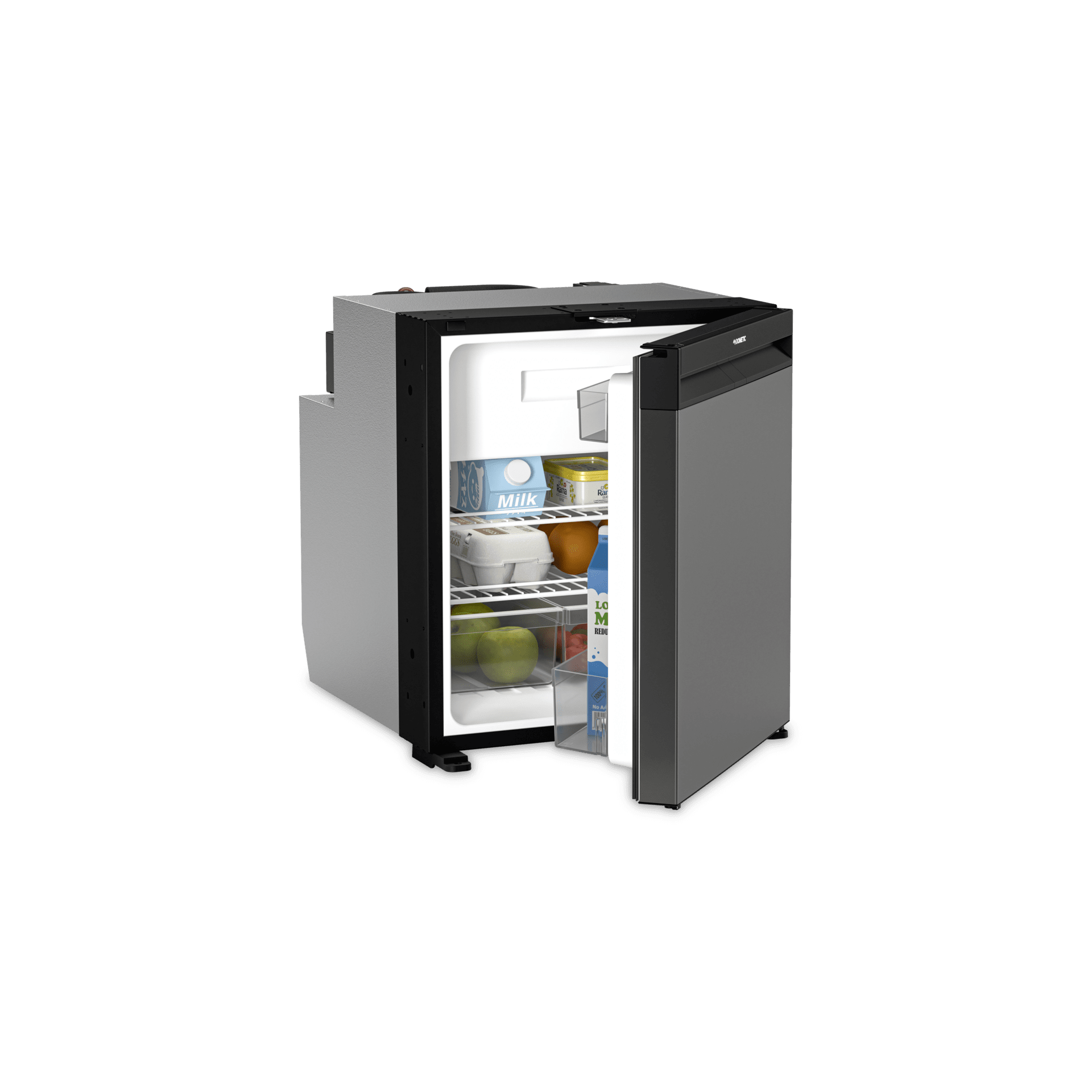
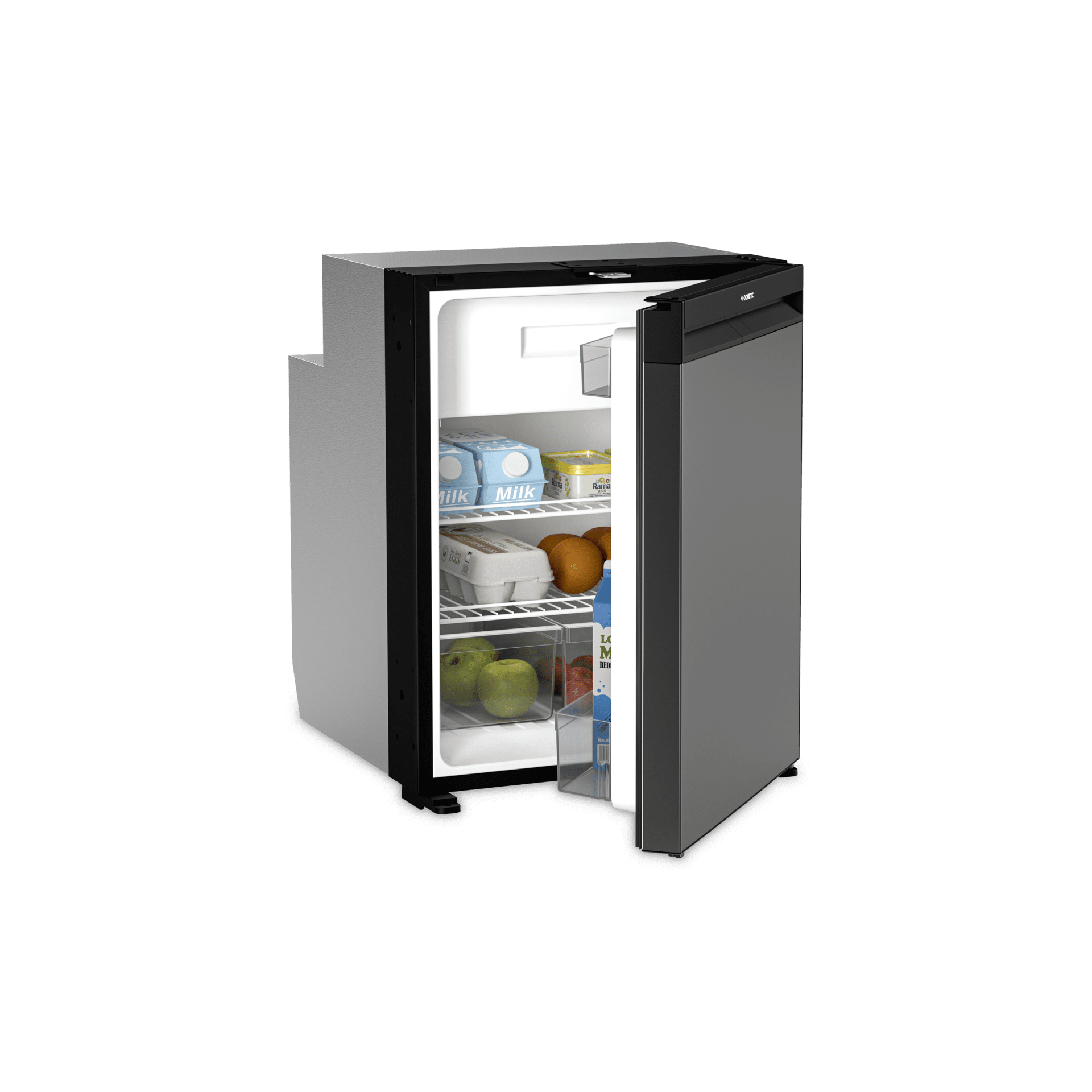
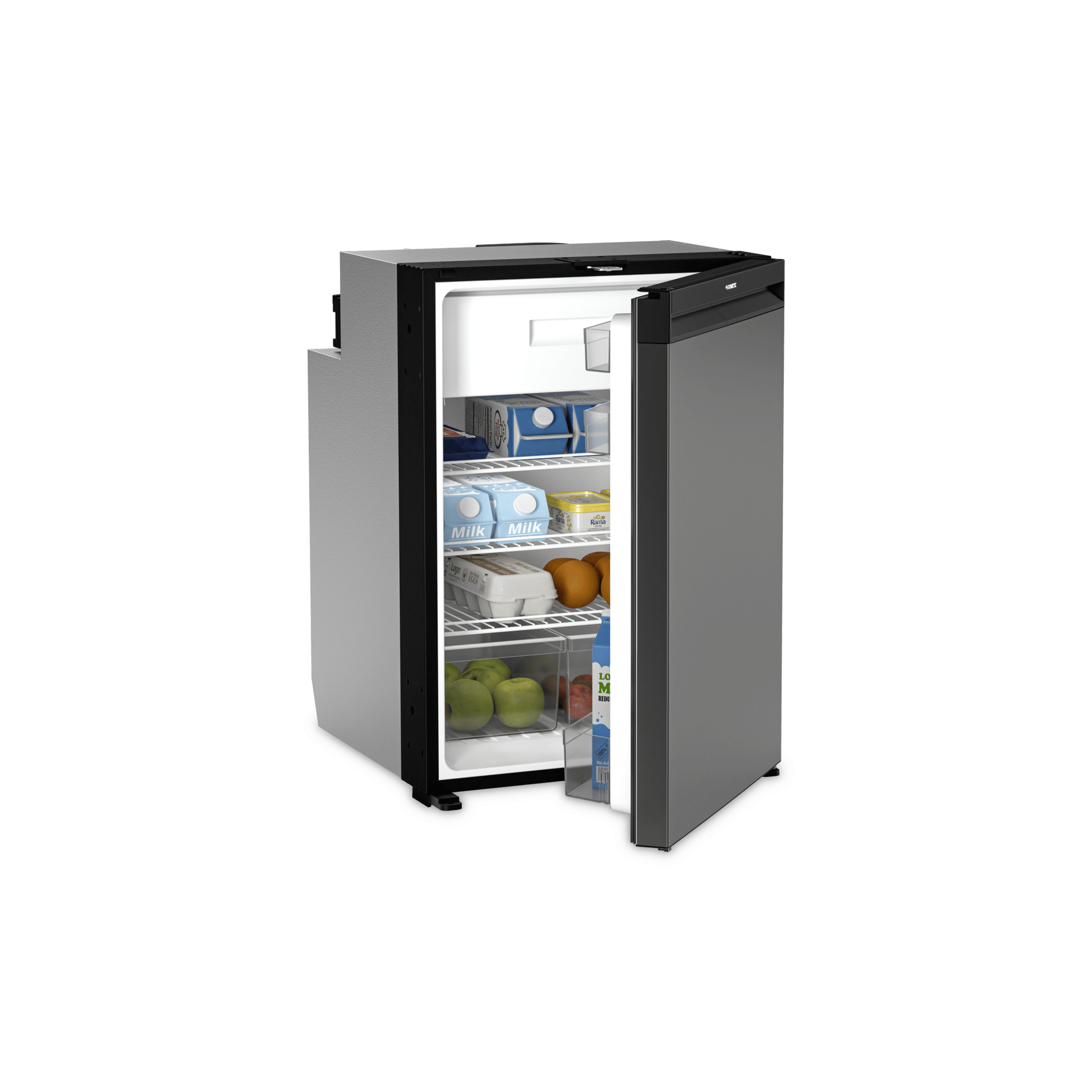
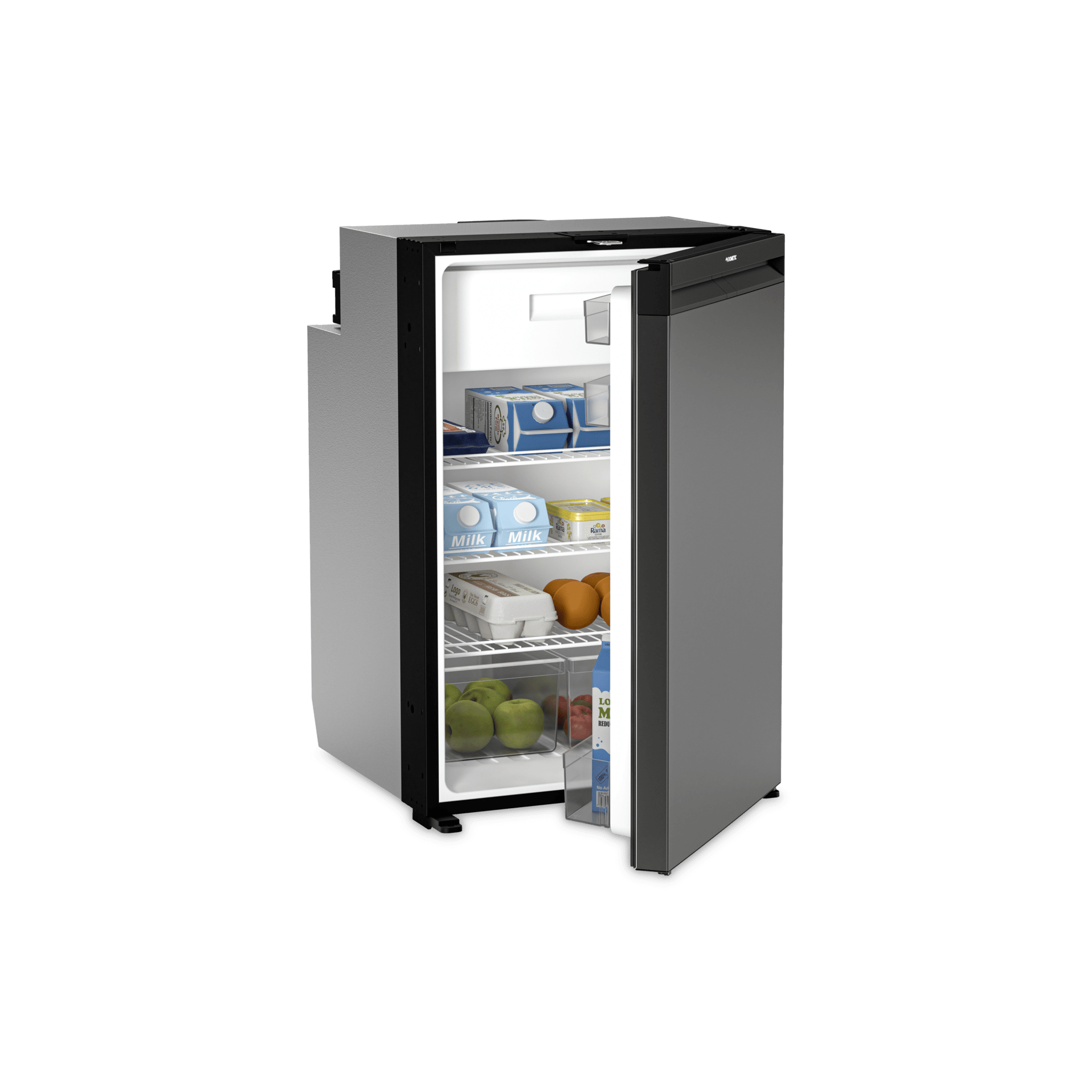
Where to buy the Dometic CFX3 and CFX5
The Dometic CFX3 has now been discontinued and replaced by the newer Dometic CFX5 range. So, availability of new CFX3 models is becoming increasingly limited.
If you’re looking for a CFX3, you may still find remaining retailer stock or a good second-hand example. At the right price, the CFX3 can still be a very capable fridge - particularly if you’re happy with the previous-generation design.
If you’re buying new, though, we recommend comparing the equivalent Dometic CFX5 model first. The newer range builds on what we liked about the CFX3, with improved insulation, efficiency and refinement.
You can find the whole range of Dometic CFX5 fridges on our website. We have every size available, from 25L up to 95L, including the Ice Maker and Dual Zone models. We have every size available, from 25L up to 95L, including the Ice Maker and Dual Zone models.
If you buy your Dometic CFX5 fridge through us, you’ll get a 5 year warranty and free delivery.
You can also browse our current range of fridges and coolboxes to see the latest options available.
If you prefer a built-in fridge rather than a portable top-loading coolbox, it’s also worth looking at the Dometic NRX range. A front-opening fridge can be easier to integrate into a campervan kitchen and may suit you better if you don’t need the portability of a CFX.
Which size Dometic CFX3 or CFX5 do I need?
The CFX3 range is now the previous generation, but this section is still useful if you already own one, are considering a second-hand model or want to compare a particular CFX3 size.
If you’re buying new, most CFX3 models now have a direct equivalent in the newer Dometic CFX5 range. We’ve noted the current replacement alongside each model below.
Dometic CFX3 25 and CFX5 25 review
Although these are the smallest models in the lineup, they use the exact same premium compressor cooling as the largest units and can drop all the way down to -22°C in freezer mode.
Cons: The storage capacity inside these models is highly restrictive. The CFX3 25 or CFX5 25 will only hold your bare essentials, meaning you will need to stop at supermarkets regularly if you travel for more than a few days.
CFX3 Power Profile: Draws 37Ah per day (0.44kWh/24h) under standard testing conditions (5°C internal / 25°C ambient), making it very easy to support with a modest battery and a single solar panel.
CFX5 Power Profile: Uses an average of 0.77Ah/h, dropping its 24-hour total down to approximately 18.5Ah per day (0.22kWh) even under hotter test environments.
Pros: Both, the Dometic CFX3 25 and CFX5 25 are exceptionally lightweight and portable, making it easy to shift in and out of your van. Their remarkably low power draw is easy to support on small off-grid electrical setups.
Dometic CFX3 35 and CFX5 35 review
The Dometic CFX3 35 and CFX5 35 keep the highly portable and easy-to-move nature of the smaller 25 models but have an extra 10L of valuable storage capacity.
Cons: The interior volume will still feel quite cramped for couples who want to pack for trips lasting longer than a few days.
CFX3 Power Profile: Draws roughly 39Ah per day (0.47kWh/24h).
CFX5 Power Profile: Pulls an average of 0.77Ah/h for a total daily draw of 18.5Ah per day (0.22kWh).
Pros: This size of the series has the perfect balance between a compact physical footprint and enough interior space for a weekend getaway. You can also use a portable power station together with a portable solar panel to run the CFX3 35 or CFX5 35. Since everything has been designed for easy carrying, this is the ultimate set-up for portability.
Dometic CFX3 45 and CFX5 45 review
The 45-litre size is easily one of the most popular choices for people who go on regular campervan trips. There’s enough storage space for several meals and the usual essentials without the fridge becoming excessively bulky.
Cons: Once the unit is packed completely full with food and drinks, it becomes noticeably heavy and can be awkward to lift single-handedly.
CFX3 Power Profile: Pulls a relatively low 41Ah per day (0.49kWh/24h).
CFX5 Power Profile: Runs at an average current of 0.86Ah/h, resulting in a predictable 20.6Ah per day (0.25kWh) workload.
Pros: The Dometic CFX3 45 and CFX5 45 provide a generous amount of room to organize several days of fresh ingredients without taking up an excessive amount of floor space inside the campervan. And although they are a little larger, the chunky handles on the CFX3 45 and CFX5 35 also make it reasonably straightforward to lift them in and out of the van.
Dometic CFX3 55 review
The Dometic CFX3 55 and the Dometic CFX5 55 are a good middle ground between the smaller models with limited storage space and the larger models which become difficult to carry when they’re full. With enough space to pack a week’s worth of food for two people, the CFX3 55 and CFX5 55 are a really popular size option.
Cons: Because these units take up more physical space than the smaller versions, you will need to plan your van's layout more carefully. If you’re planning to use the CFX3 55 and CFX5 55 for extended time off-grid, you’ll want to make sure your battery capacity and charging system can comfortably keep up with that consumption alongside the rest of your electrical loads.
CFX3 Power Profile: Consumes roughly 47Ah per day (0.56kWh/24h).
CFX5 Power Profile: Drops energy use down to an average of 0.87Ah/h, working out to just 20.9Ah per day (0.25kWh).
Pros: This size offers ample storage to comfortably feed a couple for an entire week on the road while maintaining a highly sustainable power draw. During the summer months, the CFX3's 47Ah daily consumption is easy to manage with a standard solar setup, while the updated CFX5 delivers even greater energy efficiency for a fridge of this capacity.
Dometic CFX3 55IM and CFX5 55IM review
The Dometic CFX3 55IM and CFX5 55IM are a great option if you don’t need a full freezer compartment, but still want ice cubes to top up cold drinks.
Cons: Running the ice-making function adds a significant extra load to your electrical system, requiring you to have a large leisure battery and reliable solar charging setup when staying off-grid.
CFX3 Power Profile: Averages 49Ah per day (0.59kWh/24h) under normal use, climbing to 100Ah per day (1.2kWh) in 32°C heat with the ice-maker continuously active.
CFX5 Power Profile: Draws a base 20.9Ah per day (0.25kWh) with the ice maker off, rising to 1.20Ah/h, or 28.8Ah per day (0.35kWh), when maintaining ice.
Pros: The 55IM is the same overall size as the Dometic CFX3 55 and CFX5 55, but includes an additional compartment containing two silicone ice trays. You just need to fill these ice trays with water, and you’ll have ice cubes ready to go in a few hours, all without needing to sacrifice valuable storage space to a true, power-hungry freezer section. The ice maker can also be switched off when you don’t need it, which gives you some control over that additional energy use.

Dometic CFX3 75DZ and CFX5 75DZ review
The Dometic CFX3 75DZ and CFX5 75DZ both have two separate zones which can be set to different temperatures. This gives you the option of running one compartment as a fridge and the other as a freezer. When you don’t need the freezer, you can set both compartments to fridge mode.
Cons: If you plan to spend time off-grid with the older CFX3 version, its heavy 140Ah daily power draw will rapidly drain a standard leisure battery, therefore we only recommend it if you have a massive solar setup or spend a lot of time hooked up to mains power. While the upgraded CFX5 model cuts this workload down to a much more manageable 58.8Ah per day due to its advanced insulation, both dual-zone models still require careful battery planning compared to smaller, single-zone fridges.
CFX3 Power Profile: Pulls a substantial 140Ah per day (1.68kWh/24h) in pure fridge mode, spiking up to 253.3Ah per day (3.04kWh) under a true fridge/freezer split in hot weather.
CFX5 Power Profile: Manages a simultaneous fridge (4°C) and freezer (-15°C) split at an average of 2.45Ah/h, demanding just 58.8Ah per day (0.71kWh).
Pros: In both, the CFX3 75DZ and CFX5 75DZ, the independent compartments provide the ultimate layout flexibility, you can keep fresh food chilled on one side while keeping frozen goods or ice cream solid on the other. Both versions have a lot of storage space and thanks to the robust handles, they should easily be carried by two people, even when full.
Dometic CFX3 95DZ and CFX5 95DZ review
The Dometic CFX3 95DZ and CFX5 95DZ are the larger of the two fridge-freezer models. With two independent cooling zones and 93L (CFX3) or 94L (CFX5) of storage capacity, it offers plenty of room for longer trips or families carrying a substantial amount of food.
Cons: At almost 1m in length, and 50cm wide, this fridge is definitely a bit of a whopper to carry around! We’d recommend finding a designated spot for this fridge inside your campervan, to save lugging it around too much when it’s full. The older CFX3 variant has a severe daily power draw that typically requires a large lithium battery bank or a mains campsite hookup. And even though the upgraded Dometic CFX5 95DZ with its advanced vacuum insulation panels cut the power consumption down to a much more manageable 67.9Ah per day, it will still use up quite a lot of energy if you’re using 12V power. Make sure you’ve calculated your daily power usage and chosen a leisure battery and solar panel which can handle the extra demand.
CFX3 Power Profile: Consumes a hefty 164Ah per day (1.97kWh/24h) as a baseline, climbing all the way to 297.5Ah per day (3.57kWh) under heavy summer freezer workloads.
CFX5 Power Profile: Showcases a massive leap in insulation efficiency, managing a true dual-zone fridge/freezer split at an average current of 2.83Ah/h, totaling 67.9Ah per day (0.82kWh).
Pros: If you’ll be spending most of your time hooked up to mains power, the CFX3 95DZ will serve you well without any hassle. With 93L (CFX3) or 94L (CFX5) of storage capacity, you can easily feed a family or stock up for a long trip without regular supermarket stops.

Dometic CFX3 100 review
The Dometic CFX3 100 is definitely the best choice if you want a big top-loading fridge which you can power when you’re off-grid.
Cons: You completely lose the flexibility of running a combined fridge and freezer setup at the same time. The Dometic CFX3 100 is also pretty large, so you'll need two people to lift it in and out of your camper. Furthermore, the Dometic CFX3 100 doesn’t have a direct CFX5 100 replacement, so if you’re buying new, it’s worth comparing the current Dometic CFX5 range based on the capacity and layout you actually need rather than looking for a like-for-like successor.
Power Profile: Draws just 76Ah per day (0.91kWh) under standard conditions. Set entirely to a deep freeze (-15°C) in hot weather, its maximum consumption maxes out at 111.7Ah per day (1.34kWh).
Pros: Although it’s technically a little larger than the CFX3 95DZ and CFX5 95DZ, the CFX3 100 uses much less power. For instance, when both fridges are set to 5oC, the CFX3 100 will use just 76Ah per day, whereas the 95DZ will use around 164Ah. For this reason, if you’re planning to spend time off-grid, the CFX3 100 might be the better choice for you.

Dometic CFX3 and CFX5 FAQs
-
Yes. The CFX3 is now Dometic’s previous-generation premium compressor coolbox range, with the newer Dometic CFX5 taking its place as the current model line.
Dometic still provides support information for the CFX3, but new buyers should compare the equivalent CFX5 first
-
The Dometic CFX5 replaced the CFX3 range. Current equivalents include the CFX5 25, 35, 45, 55, 55IM, 75DZ and 95DZ.
The old Dometic CFX3 100 doesn’t have a direct CFX5 100 replacement.
-
Both are portable compressor fridges designed for campervan and off-grid use, but the Dometic CFX5 introduces Vacuum Insulated Panels, the newer VMSO 3.5 compressor and quieter operation.
Dometic says the CFX5 is up to 6dB quieter than the CFX3, whilst the updated insulation and compressor are designed to improve efficiency and performance.
.
-
The Dometic CFX5 is the newer and more refined generation, with improved insulation, an updated compressor and lower noise levels.
That doesn’t suddenly make the CFX3 a poor fridge. Our own CFX3 45 has proved very capable over several years of campervan use.
If you already own a CFX3, it remains a capable fridge. If you’re buying new, though, the equivalent Dometic CFX5 is the more up-to-date option.
-
A DometProbably not if your existing CFX3 is still working well.
The Dometic CFX5 brings worthwhile improvements, but we wouldn’t replace a perfectly good CFX3 simply because a newer model exists.
If you’re replacing a worn-out fridge or buying another unit anyway, the equivalent CFX5 is the model we’d look at first.
-
The Wi-Fi connection should, in theory, be stronger than the Bluetooth connection. However, if your phone is connected directly to the Dometic CFX via Wi-Fi, it won’t be able to connect to your Wi-Fi router at the same time.
For this reason, Bluetooth may be more convenient if you also need your phone to remain connected to Wi-Fi for internet access.
Dometic CFX3 and CFX5 users are now encouraged to use the Dometic Power app which supports temperature control, alerts, temperature history and DC power-consumption history.
-
When the compressor is running, the Dometic CFX3 fridges draw between 6.5A - 11A, depending on the model.
This isn’t the same as the average current draw over 24 hours. The compressor cycles on and off as required to maintain temperature, so actual daily energy consumption will depend on the model, ambient temperature, temperature setting and how the fridge is used.
For the amp draw of a particular model, check the specification on our product pages.
-
Dometic cooler fridges such as the CFX3 and CFX5 use a compressor to cool the interior.
Many conventional coolboxes use thermoelectric cooling instead. A compressor system can reach much lower temperatures and operate as a freezer, making it better suited to longer campervan trips and off-grid use where reliable refrigeration is important.
-
The Dometic CFX is a top-loading, coolbox-style portable fridge. In contrast, the Dometic CRX and the newer NRX range are front-opening fridges designed to be permanently fitted into a campervan kitchen unit.
While the CFX offers greater portability, the CRX and its next-generation successor, the NRX, provide a much more conventional, built-in fridge layout.
-
Both the Dometic CFX3 and CFX5 can be powered from 12/24V DC or mains electricity.
In a campervan, you can run them from a 12V cigarette lighter socket connected to your leisure battery, or use mains power when you’re on electric hook-up.
Both generations can also be powered from the Dometic PLB40 power bank, which can be useful if you want to use the fridge away from the van.
-
You can plug the Dometic CFX fridge into a 12V cigarette lighter socket powered from your campervan’s leisure battery.
Because the CFX fridges are portable, you don’t need to wire them permanently to the battery.


Charlie & Dale
Co-founders
About the author
Charlie and Dale are the co-founders of Nohma and co-authors of The Van Conversion Bible. Charlie has a BSc in Physics with Astrophysics and a background in analytics, software development and digital marketing, and Dale has a BSc in Product Design and has spent ten years working in engineering - first as a Design Engineer at a consultancy, then as a Lead Engineer at Dyson. Together, they combine data, software, product design and hands-on engineering expertise to create practical, carefully designed systems and content for life on the road.



Any idea why the CFX3 dual-zone dometic is much less power efficient in relation to its size vs the single zone CFX3 even if they are all set to the same fridge temperature?
Hi Steve,
The reason for the CFX3 dual-zone dometic being less efficient is because it has a freezer, so for all of the dual-zones even though they're set to the same fridge temperature half of the consumption will be for the freezer. Hope this helps!