
A useful guide to the best electric water heaters for a campervan
Whether you’re rinsing off muddy boots after a big hike, washing sandy feet post-surf, or just trying to keep kids clean on the road, having access to hot water in your campervan can make van life feel that bit more comfortable - and a lot more practical. We’ve already shared how we set up our gas-powered outdoor shower, which is great for off-grid adventures. But if you’d prefer to avoid gas, or you want an internal shower, an electric water heater might be a better fit.
In this guide, we’ll dive into electric water heaters for campervans - how they work, why they can be a great option, and what to consider before installing one in your campervan water system. Whether you're converting your van from scratch or just looking to upgrade your setup, we’ll help you figure out if going electric is the right move for you.
What is an electric water heater for a campervan?
An electric water heater for a campervan is a compact, energy-efficient system that heats water using electricity, rather than gas. Ideal for off-grid setups and those looking to avoid LPG, these heaters come in various sizes and styles - from 12V and 24V low-power models that are powered via your leisure battery, to more powerful 230V options designed for use when plugged into electric hook-up.
Most electric water heaters fall into one of two categories:
- DC-powered heaters (12V or 24V): Running directly from your leisure battery, these are what’s needed for off-grid use. Some models, such as the 200W Bobil DC heater, even come with programmable controllers that prevent battery drain and automatically divert excess solar or B2B charging power to heat your water. This means free hot water when the sun’s shining or you're on the move.
- AC-powered heaters (230V): These are ideal if you spend time on campsites with electrical hook-up. They heat water faster, but rely on a shore power connection.
Different tank sizes to suit your setup
Electric water heaters come in a range of tank sizes, typically from around 6L up to 15L. Smaller tanks heat up faster and use less power, ideal for quick showers or washing up. Larger tanks are better for families or those who enjoy longer showers, though they will naturally draw more energy and may require a larger battery and recharging capabilities for your campervan electrical system.

Make sure you're mindful of your electrical requirements when deciding on an electric water heater.
Hybrid systems
If you're after flexibility, a hybrid electric water heater could be the way to go. For example, the Bobil Air Hybrid allows you to heat water from your diesel heater, 12V or 230V electricity. It works by pumping water through a heat exchanger connected to your diesel heater, providing efficient and low-draw access to hot water for dishes, washing up or showers. The 10L insulated tank connects easily to your existing plumbing and requires very little power to maintain temperature throughout the day.
When paired with a diesel heater such as the Autoterm 2kW or 4kW and a smart controller, the system becomes even more efficient. The controller intelligently diverts heat and power based on your needs, sending warm air into the van, heating water, or both. It also lets you make the most of excess solar power, heating water automatically without touching your battery.
Whether you're building your van to go fully off-grid, or just want a reliable hot water setup that doesn’t rely on LPG, electric and hybrid systems offer an increasingly practical, low-maintenance solution. Find out more about diesel heaters and other heating options for your campervan in our campervan heater article.
Why choose an electric water heater for your van?
If you’re building an all-electric campervan setup, you’ve probably weighed up the pros and cons of ditching gas. LPG can be a perfectly safe and affordable option when installed properly. That said, many vanlifers are now choosing to go fully electric, often to simplify their setup or avoid the need for gas entirely.
If that’s the route you're taking, then adding an electric water heater will likely be a necessity, especially if you’re already investing in a campervan electrical system capable of powering an induction hob. It’s not the cheapest approach, but if you’re committed to going gas-free, it’s the most straightforward way to get hot water on the road.
Making the most of excess solar and DC-DC charging
One of the biggest advantages of going electric, especially if you’re building an off-grid setup, is the ability to use energy you’re already generating to heat your water.
If you have a solar array and a DC-DC charger, at times you will likely be producing more power than you can store at certain times of day (i.e. when your batteries are already full). That’s where a 12V or 24V electric water heater with smart controls really comes into its own.
Systems like the Bobil 200W DC heater include a programmable controller that can automatically divert excess energy from your solar panels or B2B charger into heating water. That means no manual switching, no battery drain, just free hot water, powered by the sun or your alternator whilst you drive.
For full-time van lifers or anyone travelling through sunnier seasons, it’s a brilliant way to reduce reliance on campsite hook-up or gas, and get more out of the setup you already have.

Harnessing excess energy to heat water is a great use of power.
Not always cheaper, but makes sense for the right setup
It’s worth being realistic: a fully electric water heating setup (especially combined with cooking on induction) will require a more expensive electrical system to support it - think larger batteries and a decent solar array and DC-DC charger. In contrast, a traditional LPG water heater is often cheaper to install and doesn't put the same demand on your electrical system.
But if you’re already going electric-first, or you just want the convenience of ditching gas altogether, then an electric water heater can slot neatly into your water system, with the added bonus of being quiet and low-maintenance.
What to consider before installing an electric water heater
Before installing an electric water heater in your camper, it’s worth calculating the effect it will have on your electrical system. Heating water with electricity uses a fair amount of power. So, if you’re going fully off-grid, you’ll want to make sure your battery bank, solar setup, and DC-DC charging can comfortably support it.
Understanding your power needs
Let’s take the Bobil 15L water heater we mentioned earlier as an example. It runs at 200W on 12V DC, and the electric heating time from 15 to 60 degrees is:
- 60 minutes on 230V AC (e.g. when on shore power)
- 220 minutes on 12V DC (off-grid)
So, off-grid, the total power usage is:
200W x 220 minutes = 733Wh
If you’re heating once a day off-grid, you’ll need to include 733Wh in your daily energy usage, alongside all of your other appliances. For context, the average Nohma electrical system we design has a daily power usage of 838Wh/day. So, in this instance, an electric water heater would almost double the power usage!
However, it’s likely that if you’re considering an electric water heater, you will also have an induction hob. A twin ring (~2400W) induction hob used on ~80% of max for 45 minutes/day has a power usage of 960Wh.
This is all completely manageable with the right system, but you need to be sure to include this in your power calculations, and subsequently the size of not only your battery bank, but also your solar array and DC-DC charging.
Not sure how to work all this out? Get in touch and one of our engineers can help design a setup that suits your van, travels, and power needs.
Campervan electrics leaving you confused?

Plan for heat-up time
Electric water heaters take longer to heat up than gas models, especially on 12V. If you’re used to instant hot water, just bear in mind that it’ll take time. So, you might need to plan your usage around when you last ran the heater. Some people use a timer or controller to kick-start the heating process during peak solar hours or whilst driving.
A good option to help manage this automatically is Victron’s Cerbo GX. It can act as a smart controller for your electric water heater, allowing you to schedule heating based on time of day, battery level, or even solar input. With the right setup, you can make sure your water is only heated when your system has the capacity. If you’re already using Victron gear, it’s a seamless upgrade. We’ve written a full article on how to use the Cerbo GX to control devices like this.

The Cerbo GX is a great piece of kit for monitoring and controlling your campervan electrical system.
Best campervan electric water heaters in 2025
There’s no one-size-fits-all when it comes to hot water in a campervan. However, these are some of the best electric water heaters available in 2025. We’ve looked at performance, power flexibility, and how well they suit life on the road.
Bobil 15L Hybrid Electric Water Heater
Key features:
- 15L insulated, pressurised tank
- 200W (12V DC) + 1500W (230V AC) electric heating
- Integrated diesel heat exchanger
- Smart controller prioritises excess solar or DC-DC charging
- Compatible with the Bobil Smart Controller and Cerbo GX
If you're going gas-free, Bobil’s hybrid heater offers a lot of flexibility. You can heat water off-grid using solar or alternator charging, speed things up with shore power when you’re on a campsite, or tap into your diesel air heater. It’s a great all-rounder for electric-first setups, especially when paired with a smart control system.

Propex 230V Electric Storage Heater
Key features:
- 6-10L tank with 800W electric element
- Designed for campervans and motorhomes
- Compact and well insulated
- UK-made and well supported
The Propex electric storage heater is ideal for van lifers who regularly use hook-up. It's a straightforward, mains-powered solution with decent insulation and build quality. The Propex heater isn’t suitable for off-grid use unless your electrical system can handle the AC demand with a suitably sized inverter.

Svans 10L 12V Electric Water Heater
Key features:
- 10L stainless steel tank
- 12V DC input (180-200W range)
- Pressure-resistant and insulated
- Simple operation
If you want a basic 12V hot water solution for your van build, the Svan 10L model offers solid performance with minimal fuss. It’s best for low-demand setups or occasional use, and works well when paired with a timer or smart relay. Just bear in mind slower heat-up times compared to AC options.

VELPAX Mini Electric 10-15L
Key features:
- 10–15L tank capacity
- 230V AC, ~1500W
- Wall-mountable and insulated
- Designed for fast heat-up
A solid pick for anyone staying at campsites or running a powerful inverter. The Velpax mini electric heats up quickly and delivers plenty of hot water, making it great for couples or longer stays. Just be aware of the high AC draw - it’s not well-suited for off-grid setups unless you have a large electrical system.
What to look for in an electric water heater?
If you’re going all-electric, here’s what’s worth keeping in mind when choosing your setup:
- Power type - 12V or 24V DC is a must for off-grid use. Some heaters also support AC for faster heat-up on hook-up.
Energy usage - Heating water uses more energy than people expect. Make sure to factor this into your daily power budget. - Controllers & integration - A smart controller can help heat water using excess solar or alternator charging, making the most of your existing system without draining your batteries.
Tank size & insulation - Bigger tanks hold more hot water, but they use more energy to heat and take up more space. Good insulation reduces how often you need to reheat. - Recovery time - If you're using the water for showers, washing up, or both - consider how long the heater takes to get back up to temperature.
Electric vs gas water heaters - which should you choose?
When it comes to heating water in your campervan, the two main options are electric and gas. Each has its own pros and cons, and the right choice largely depends on your travel style, power setup, and personal preferences.
Electric water heaters
Pros:
- Ideal for all-electric or LPG-free builds
- Can run from 12V, 24V, or 230V, depending on the model
- Great when paired with solar or DC-DC charging
- No need to carry gas bottles
- Easier to automate with smart controllers (e.g. Cerbo GX)
Cons:
- Much higher energy demand, impacting the cost of your electrical system
- Slower heat-up times on DC (e.g. 200W = ~220 mins for 15L, vs 5-10 mins for LPG)
- Needs careful power planning and good battery capacity
Best for:
Those already going fully electric (e.g. induction cooking, large battery/solar setup) and who want to avoid LPG completely.
LPG water heaters
Pros:
- Fast heat-up times, even for larger tanks
- Efficient and low draw on electrical system
- Cheaper overall setup, especially for mixed fuel builds
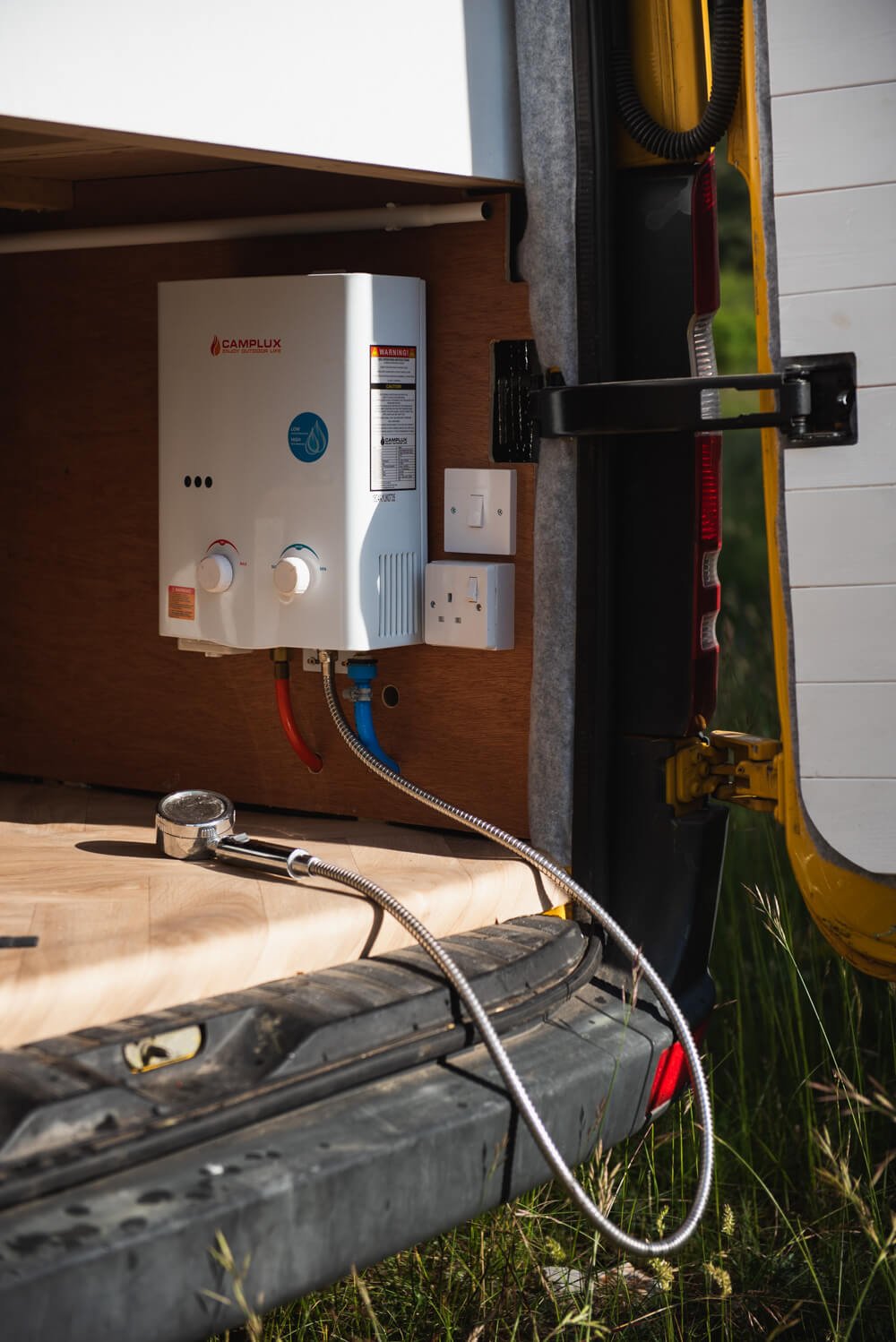
- Very cost effective options available (tankless water heater) for those who only need access to an outdoor shower
Cons:
- Needs LPG storage, ventilation, and safety checks
- Perceived safety concerns
- Can be harder to refill gas (depending on bottle type)
Best for:
Vans with existing or planned LPG systems (e.g. gas hob or heating), or anyone looking for a cost-effective, reliable water heating solution without impacting the electrics.

Which should you choose?
If you're building a van around a powerful electrical system with solar and induction cooking, then electric water heating is probably the natural choice. Just be aware of the power demands and make sure your batteries and charging setup can handle it.
On the other hand, if you're happy running LPG for cooking or heating, a gas water heater is often simpler and more efficient, especially if you're conscious of budget or space.
Still not sure? Get in touch and we’ll help you weigh up the pros and cons based on your setup and travel plans.
Final thoughts
If you're going down the all-electric route, adding an electric water heater is likely going to be part of the package. This is especially true if you're already investing in a system that can handle things like induction cooking and off-grid living.
Yes, electric water heating can be slower and more power-hungry than LPG. But, with the right setup, smart controls, and a bit of planning, it can work really well. For many van lifers, making use of excess solar or alternator charging to get free hot water is a huge win.
The key is to be realistic about your power needs and build your system accordingly. Whether you're starting from scratch or looking to upgrade, we're here to help you make sense of it all - from heater options to full off-grid system design.
Campervan electrics leaving you confused?
FAQs
-
You can run an electric water heater off-grid in a campervan, but you will need a suitable electrical system. Electric water heaters can draw a lot of power, especially when heating a full tank. Using a 12V or 24V model with a smart controller and excess solar or DC-DC charging can make it more manageable and energy-efficient.
-
A 200W 12V heater heating a 15L tank over 220 minutes uses 733Wh. AC models heat faster but draw more (usually 1000-1500W). If you are on hook-up, this power will come straight from the campsite hook-up. Always factor water heating into your total daily off-grid energy usage when designing your setup.
-
The Cerbo GX can be configured to act as a smart timer or switch for the electric water heater in your campervan. You can set it to heat water only when batteries are full, when you have excess solar, or at certain times of day. It’s a great way to integrate your water heating into the rest of your system. Check out our full guide to the Cerbo GX for more information.
-
Using 12V DC, heating water with electricity in a campervan can take between 2-4 hours, depending on the tank size and power rating. For example, the Bobil 15L unit takes 220 minutes on 12V, or 60 minutes on 230V (when connected to shore power). If you need instant hot water, gas heaters are faster, but electric systems can work well if you plan ahead or heat during the day.
-
Most campervan electric water heaters use 6–15 litre tanks.
- Smaller tanks (6-10L) heat faster and use less energy - great for solo travellers or washing up.
- Larger tanks (10-15L) are better for showers or families but take longer to heat and draw more power.
The right size ultimately depends on your water usage and available space.


Charlie & Dale
Co-founders
About the author
Charlie and Dale are the co-founders of Nohma and co-authors of The Van Conversion Bible. Charlie has a BSc in Physics with Astrophysics and a background in analytics, software development and digital marketing, and Dale has a BSc in Product Design and has spent ten years working in engineering - first as a Design Engineer at a consultancy, then as a Lead Engineer at Dyson. Together, they combine data, software, product design and hands-on engineering expertise to create practical, carefully designed systems and content for life on the road.

Be the first to comment!